How to Apply for the Interest-Free E-Bike Scheme 2026 in Pakistan: Eligibility, Registration & Benefits
Complete guide to Pakistan's Interest-Free E-Bike Scheme 2026 covering eligibility, required documents, online registration steps, and installment details.
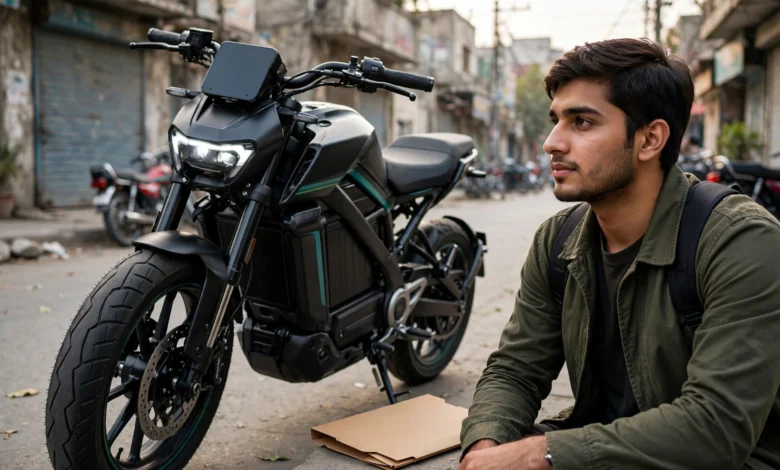
The Interest-Free E-Bike Scheme 2026 is one of the biggest transport relief programs the government has rolled out in years, and honestly, it couldn’t have come at a better time. Fuel prices keep climbing, public transport in most cities is either overcrowded or unreliable, and for students and young workers, getting to campus or the office every day has become a genuine financial headache. This scheme, run at the federal level through the PAVE (Pakistan Accelerated Vehicle Electrification) Program and mirrored by provincial initiatives like the Punjab CM E-Bike Scheme, is designed to put electric motorcycles in the hands of ordinary people through a government subsidy and zero-markup installment plan.
What makes this program different from a regular bike loan is simple: there’s no interest charged on the remaining balance. The government absorbs the markup cost, contributes a fixed subsidy toward the bike’s price, and lets applicants pay off the rest in small monthly amounts over one to three years. Selection happens through a computerized e-balloting system, which means there’s no favoritism involved and no need to know anyone in the right office.
In this guide, we’ll walk through exactly who qualifies, what documents you’ll need, how the online registration process works step by step, and what benefits you can expect once you’re selected. If you’ve been searching for a straightforward explanation of how this scheme actually works, this is it.
What Is the Interest-Free E-Bike Scheme 2026?
The Interest-Free E-Bike Scheme 2026 is a joint federal and provincial effort to encourage a shift from petrol-powered two-wheelers to electric alternatives across Pakistan. At the national level, it operates under the PAVE Program, managed by the Ministry of Industries & Production in coordination with the Punjab Information Technology Board (PITB). At the provincial level, Punjab has its own version, the CM Punjab E-Bike Scheme, launched by Chief Minister Maryam Nawaz specifically for students, teachers, and select government employees.
Both versions share the same basic idea: a government subsidy brings down the upfront cost of the bike, and the remaining balance is paid through zero-interest monthly installments, typically spread over 24 to 36 months. The government covers the bank markup entirely, so applicants only repay the principal amount of the bike, nothing more.
Roughly 116,000 electric bikes are being distributed nationwide under the federal program, covering all four provinces plus Azad Jammu & Kashmir and Gilgit-Baltistan. Punjab’s own scheme runs separately and is aimed specifically at students within the province.
Key Features of the Scheme
- A fixed subsidy amount deducted directly from the bike’s retail price
- Zero-interest, bank-financed installment plans
- Selection through transparent computerized e-balloting, not first-come-first-served
- A reserved quota for women applicants (25% under the federal program)
- Coverage across all provinces and both federal and territorial regions
- Separate tracks for students, general citizens, and in some cases government employees
Why This Scheme Matters for Pakistan Right Now
It’s worth pausing on why this program is getting so much attention. A typical petrol motorcycle costs a commuter anywhere from Rs. 4,000 to Rs. 8,000 a month in fuel alone, depending on how much they ride. An electric bike, by comparison, can cost a fraction of that in electricity, sometimes under Rs. 500 a month for average daily use. That’s a meaningful saving for a household budget, especially for students and lower-income families who are the primary target of this initiative.
There’s also a broader policy goal here. Pakistan imports the bulk of its petroleum, and every barrel not consumed domestically eases pressure on the country’s import bill and foreign exchange reserves. Encouraging electric two-wheelers at scale is part of a wider push toward reducing fuel dependency, something the State Bank of Pakistan has flagged repeatedly in its reports on the trade deficit and import composition.
For students specifically, reliable transport also has a knock-on effect on attendance and safety, which is part of why the Punjab government tied its version of the scheme directly to education reforms.
Eligibility Criteria for the Interest-Free E-Bike Scheme 2026
Eligibility rules differ slightly depending on whether you’re applying through the federal PAVE portal or the Punjab-specific CM scheme, but the core requirements overlap significantly.
General Eligibility (Federal PAVE Scheme)
- Must be a Pakistani citizen with a valid CNIC
- Must be at least 18 years old
- Each CNIC can only be used for one application; duplicate entries under the same identity number are automatically disqualified
- A driving license is not mandatory for electric motorcycle applicants, though it’s required for electric rickshaws or three-wheeler loaders
- Priority consideration is given to students, women, and lower-income households
- No formal income proof is required at the basic application stage, though banks may request financial documentation if you opt for the lease-financing route
- Overseas Pakistanis holding NICOP or POC documentation are also eligible to apply
Eligibility for the Punjab CM E-Bike Scheme (Students)
- Must hold a valid Punjab domicile
- Must be enrolled as a student and between 18 and 35 years of age, with some relaxation allowed for special cases
- Must possess a valid motorcycle driving license or a learner’s permit
- Applicant should not already own a registered motor vehicle
- Only one applicant per household is eligible, even if multiple siblings otherwise qualify
- Female students receive their electric bikes completely free of cost, while male students pay a modest down payment followed by interest-free monthly installments
If you meet the criteria for both the federal and provincial schemes, you’re generally allowed to apply for both, since they run through separate portals and separate selection processes. Being chosen under one doesn’t disqualify you from the other.
Documents Required to Apply
Before you sit down to register, it helps to have everything scanned and ready so you’re not scrambling mid-application. Missing or unclear documents are consistently cited as the top reason applications get rejected at the verification stage.
- Valid CNIC (original and a clear scanned copy)
- Passport-size photograph, recent and clearly visible
- Proof of student status, such as a valid student card or enrollment certificate (for student category applicants)
- Motorcycle driving license or learner’s permit, where applicable
- Domicile certificate (required specifically for provincial schemes like Punjab’s)
- Active mobile number registered in the applicant’s own name, since OTP verification is used throughout the process
- Bank account details, if you intend to use the lease-financing option rather than self-financing
- Proof of income or salary slip, in cases where bank verification is required for financed applications
Keep physical copies alongside digital scans. Some verification stages, particularly for the bank-financed route, may still ask for originals to be shown in person.
How to Apply for the Interest-Free E-Bike Scheme 2026: Step-by-Step Registration
Here’s where most applicants get stuck, not because the process is complicated, but because they’re not sure which portal to use or what order to follow. Here’s the full breakdown.
Step 1: Visit the Official Government Portal
For the federal scheme, go to the official PAVE portal. For Punjab’s student-specific scheme, use the dedicated Punjab government portal. Avoid third-party websites claiming to process applications on your behalf; the government has repeatedly warned against unofficial agents charging fees for what is meant to be a free registration process.
Step 2: Create Your Account
Click on “New Registration” or “Sign Up,” then enter your CNIC number and active mobile number. You’ll receive a one-time password (OTP) to verify your identity before proceeding.
Step 3: Complete the Application Form
Fill in your personal details, including your name, address, education level, occupation, and monthly income if applicable. Select your preferred vehicle type (electric bike, rickshaw, or loader) and, where relevant, your preferred manufacturer.
Step 4: Upload Required Documents
Upload clear scans of your CNIC, photograph, student certificate (if applicable), and any other supporting documents listed above. Blurry or incomplete uploads are one of the fastest ways to get your application flagged.
Step 5: Choose Your Financing Option
Depending on the scheme, you may be asked to choose between self-financing (paying the balance upfront after the subsidy) or bank-lease financing (paying in monthly installments through a partner bank). If you choose the lease option, the partner bank will conduct its own basic verification.
Step 6: Submit and Track Your Application
Once submitted, your application enters the pool for computerized e-balloting. You can track your status directly through the same portal using your CNIC. Successful applicants are notified through SMS and can view their results on the balloting result page once the draw is conducted.
Quick Checklist Before You Apply
- Double-check your CNIC number and mobile number for typos
- Confirm your uploaded documents are legible and under the required file size
- Apply early rather than waiting until the last few days of the registration window, since server load tends to spike near deadlines
- Save your application reference number for future tracking
Installment Structure and Subsidy Details
Numbers vary somewhat between the federal and provincial schemes, and the government has adjusted figures across different phases, so it’s worth checking the official portal for the exact amount at the time you apply. That said, the general structure looks like this:
- A fixed government subsidy is deducted directly from the bike’s retail price at the point of purchase
- The remaining balance is financed through a partner bank at zero markup, meaning the government pays the interest on your behalf
- Monthly installments for electric bikes generally fall in the range of Rs. 2,000 to Rs. 3,000, spread over 24 to 36 months
- A modest down payment is required upfront in most categories, though this is waived entirely for female student applicants under Punjab’s scheme
- First-year insurance is often bundled into the package for student applicants
Because policy details are revised periodically, always cross-check the current subsidy figure and installment schedule on the official portal rather than relying on older news reports.
Benefits of the Interest-Free E-Bike Scheme 2026
Financial Relief
The most obvious benefit is cost savings. Between the subsidy, the zero-interest financing, and the dramatically lower running cost of electricity versus petrol, applicants can save a substantial amount over the life of the loan compared to a conventional motorcycle purchase.
Support for Students and Women
Both the federal and provincial schemes build in specific quotas and free-of-cost provisions for women and students, groups that are often priced out of independent transport options. This isn’t just a subsidy story; it’s meant to directly improve safety and attendance for students who previously depended on unreliable or unsafe commuting options.
Environmental Impact
Every petrol bike replaced by an electric one reduces localized emissions, particularly relevant in cities like Lahore and Karachi that already struggle with air quality. Organizations such as the International Energy Agency have highlighted electric two-wheelers as one of the more cost-effective ways emerging markets can cut transport-related emissions quickly, given how much of urban commuting in South Asia happens on two-wheelers rather than cars.
Transparent, Merit-Based Selection
Because selection runs through computerized balloting rather than manual shortlisting, the process removes the usual concerns about political favoritism or connections influencing who gets picked.
Common Mistakes to Avoid When Applying
- Using unofficial websites or agents. Stick strictly to the verified government portal. Fake sites and agents charging “processing fees” have been a recurring problem, and the government does not charge for registration.
- Submitting duplicate applications. Each CNIC can only be used once; a second application under the same identity number will be automatically rejected.
- Uploading unclear documents. Blurry photos or partial scans are one of the most common reasons applications get stuck in verification.
- Missing the registration window. Registration periods are announced with specific opening and closing dates. Applying at the last minute risks running into server congestion.
- Assuming both schemes are the same. The federal PAVE program and Punjab’s CM scheme have separate eligibility rules, separate documents, and separate portals. Don’t assume approval under one guarantees approval under the other.
Frequently Asked Questions
Can I apply for both the federal and provincial e-bike schemes at the same time?
Yes, as long as you meet the eligibility criteria for each. They run through separate portals and separate selection processes, so being selected in one doesn’t affect your standing in the other.
Is a driving license required to apply?
For electric motorcycles, a license is generally preferred but not always mandatory at the registration stage. For electric rickshaws or loaders, a valid license is required.
How will I know if I’ve been selected?
Selected applicants are notified through SMS, and results are also published on the official portal under the balloting results section.
Is there really no interest charged?
Correct. The government pays the bank’s markup in full, so applicants only repay the principal cost of the bike over the agreed installment period.
Conclusion
The Interest-Free E-Bike Scheme 2026 gives everyday Pakistanis, particularly students, women, and salaried workers, a genuinely practical way to move away from expensive petrol commuting toward affordable electric transport. Between the government subsidy, zero-markup financing, and a transparent e-balloting selection process, the barriers to owning a bike have been lowered significantly compared to a standard vehicle loan. If you meet the eligibility requirements, the smartest move is to gather your documents early, register through the official portal only, and keep checking your application status rather than relying on unverified sources. Done right, this scheme could genuinely ease your monthly transport costs for years to come.