Climate Disaster Preparedness: 7 Critical Reasons Pakistan Keeps Struggling in 2026
Climate disaster preparedness in Pakistan faces gaps in funding, early warning systems, and local capacity despite growing flood and heat risks.
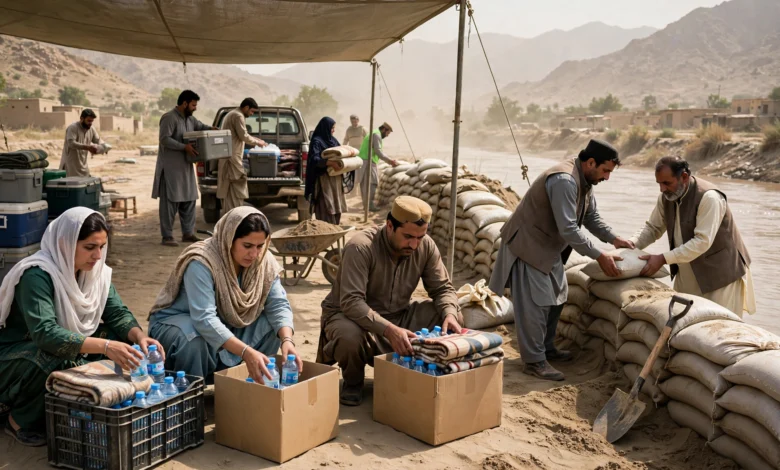
Climate disaster preparedness in Pakistan remains one of the most pressing questions facing policymakers, aid agencies, and ordinary families across the country. Every monsoon season brings the same worry back to the surface: will this be another 2022, when floods submerged a third of the country, or will the systems put in place actually hold? Pakistan sits among the ten nations most exposed to climate-related hazards, yet it continues to struggle with turning warnings into action. Floods, glacial lake outburst floods, heatwaves, droughts, and smog now arrive with a regularity that outpaces the country’s ability to plan for them.
The gap isn’t a lack of awareness. Government reports, international studies, and years of lived experience have made the risks obvious. The real issue lies in governance, financing, and the distance between national policy and what actually happens in a flooded village or a heat-struck city neighborhood. This article looks at why disaster preparedness in Pakistan keeps falling short, what’s changing, and what still needs to happen. We’ll walk through the institutional setup, the early warning gap, funding shortfalls, urban planning failures, and the community-level weaknesses that turn a bad monsoon into a national emergency. Along the way, we’ll point to what’s working, because parts of the system are genuinely improving, even if the overall picture remains uneven.
Why Pakistan Is So Exposed to Climate Disasters
Pakistan’s geography puts it in the direct path of several overlapping hazards at once. The Indus River system drains meltwater from thousands of Himalayan and Karakoram glaciers, which makes the north vulnerable to glacial lake outburst floods (GLOFs) while the south depends on the same river for irrigation and drinking water. When monsoon rainfall lands on top of glacial melt, as it did in 2022, the result is catastrophic flooding that moves from the mountains to the Arabian Sea in a matter of weeks.
A few facts explain why the country sits near the top of every global climate risk index:
- Pakistan contributes less than 1% of global greenhouse gas emissions but consistently ranks among the eight to ten countries most affected by climate-related disasters, according to the Global Climate Risk Index.
- The 2022 floods affected roughly 33 million people, destroyed over a million homes, and displaced around 8 million individuals, based on humanitarian assessments compiled after the disaster.
- Karachi and other major cities regularly record summer temperatures above 47°C, with heat-related deaths that public health systems struggle to track accurately.
- Agriculture, which employs a large share of the workforce, is repeatedly hit by both drought and flood in the same decade, sometimes the same year.
This combination of geography, glacier melt, monsoon variability, and a low-lying river basin means climate resilience isn’t optional for Pakistan. It’s a matter of basic survival planning. Yet the systems meant to manage this exposure remain inconsistent.
1. Institutional Fragmentation Slows Everything Down
Pakistan’s disaster management structure looks reasonable on paper. The National Disaster Management Authority (NDMA) sits at the federal level, with Provincial Disaster Management Authorities (PDMAs) handling implementation in each province, and district-level offices meant to carry plans down to the community. In practice, this layered structure creates friction rather than coordination.
The Federal-Provincial Divide
Since the 18th Constitutional Amendment devolved many powers to the provinces, disaster response has often become a tug-of-war over jurisdiction and funding. A province may have a response plan that isn’t matched with the budget or staffing to execute it, while the federal authority may issue advisories that provincial offices don’t have the resources to act on. A Jinnah Institute report released after the 2025 flood season pointed directly at this problem, warning that governance shortcomings and weak community-level systems were undermining the country’s ability to prepare for and respond to climate disasters, despite years of policy frameworks and international commitments.
Where Progress Is Visible
To be fair, there has been real movement. NDMA has been repositioning its National Institute of Disaster Management (NIDM) as a research-driven think tank, and it now works with hundreds of universities worldwide to bring updated science into national planning. Pakistan has also deepened cooperation with China on disaster risk reduction, including AI-based forecasting and satellite monitoring, following a 2026 symposium in Islamabad focused on hydrological and geological hazards. These are meaningful steps, but institutional reform takes years to filter down to a district officer deciding whether to evacuate a village.
2. Early Warning Systems Exist but Don’t Always Reach the People Who Need Them
Early warning systems are supposed to be the first line of defense against flash floods, GLOFs, and heatwaves. Pakistan has made genuine investments here, including satellite-based flood forecasting and automated weather stations in the north. The problem is the “last mile,” the gap between a warning issued in Islamabad and a farmer in a remote valley actually receiving and understanding it in time to act.

Common breakdowns in this chain include:
- Limited connectivity in mountainous or rural districts, where mobile networks and radio coverage are patchy.
- Language and literacy barriers, since alerts are often issued in formats that don’t reach non-Urdu or non-English speaking communities effectively.
- Delayed translation from forecast to action, meaning even an accurate warning doesn’t always trigger evacuation, livestock movement, or shelter preparation.
- Weak feedback loops, so local officials rarely report back whether warnings were received or acted upon, leaving planners unable to fix the gap.
The 2026 heatwave season illustrated this problem clearly. Pakistan’s Meteorological Department and NDMA issued repeated advisories urging people to avoid outdoor exposure during extreme heat, yet outdoor laborers without shelter or reliable electricity continued to bear the brunt of the risk. The warning existed. The protection did not follow it.
3. Chronic Underfunding of Climate Resilience
Building climate resilience costs money, and Pakistan’s fiscal space is tight. The country is simultaneously managing debt obligations, inflation, and reconstruction costs from previous disasters, which leaves limited room for the kind of long-term investment that prevention requires.
The Adaptation Financing Gap
Pakistan’s own climate commitments acknowledge this shortfall. Under its updated Nationally Determined Contribution, the government has tied a significant share of its emissions reduction and adaptation targets to the availability of international climate finance, meaning much of the plan depends on funding that isn’t guaranteed. According to Pakistan’s ND-GAIN country index standing, the nation ranks low on both readiness and vulnerability scores, reflecting both real exposure and a limited capacity to adapt with current resources.
Where Investment Is Paying Off
Some financing has translated into visible results. The World Bank has supported weather-resilient housing construction in Sindh Province following the 2022 floods, funding around 1,050,000 families to rebuild with stronger, flood-resistant materials. This kind of targeted investment shows what’s possible when funding actually reaches the household level rather than stalling in bureaucratic layers. You can review the World Bank’s ongoing climate change program in Pakistan for more detail on current adaptation financing.
4. Urban Planning Hasn’t Kept Pace with Climate Reality
Pakistan’s cities are growing faster than their infrastructure can absorb, and that mismatch shows up every time it rains hard or the temperature spikes. Karachi, Lahore, and other major urban centers were largely built without climate risk in mind, and retrofitting decades of unplanned expansion is far harder than designing for resilience from the start.
Key urban vulnerabilities include:
- Inadequate drainage systems that turn ordinary monsoon rain into urban flooding within hours.
- Loss of green cover and water bodies, which historically absorbed excess rainfall and moderated local temperatures.
- Informal settlements built on flood-prone land, often because safer land is unaffordable or unavailable.
- Heat island effects from concrete-heavy construction, which push already extreme temperatures even higher in dense neighborhoods.
Urban planners and researchers have pointed to examples like Ahmedabad’s Heat Action Plan in India, France’s post-2003 heat-health strategy, and Phoenix’s cooling center network as models Pakistan could adapt. These aren’t expensive or unproven ideas. They combine early warning with practical, on-the-ground protection such as shaded public spaces, adjusted work hours during extreme heat, and neighborhood cooling centers. The barrier in Pakistan isn’t a lack of solutions; it’s the political and financial priority given to implementing them before the next crisis hits.
5. Weak Community-Level Preparedness and Local Ownership
National policy documents can only go so far if communities themselves aren’t equipped to act on them. Disaster preparedness works best when it’s built from the ground up, with local governments, community leaders, and residents trained to respond quickly rather than waiting for instructions to arrive from the provincial or federal level.
What Local Systems Are Missing
- Trained first responders at the village or union council level who can act before formal disaster teams arrive.
- Pre-positioned supplies, such as shelter materials, clean water, and medical kits, stored close to high-risk areas rather than centralized in distant warehouses.
- Community-based early warning volunteers who understand local terrain and can supplement official alerts with real-time, on-the-ground observation.
- Regular drills and simulations, which remain rare outside a handful of pilot districts.
The Jinnah Institute’s post-flood review specifically called for reviving local disaster committees and strengthening community-level systems, arguing that national frameworks mean little if the districts implementing them lack basic capacity. This is a recurring theme across nearly every post-disaster assessment in Pakistan: the policy exists, but the last-mile delivery doesn’t.
6. Health System Strain During Climate Emergencies
Every major flood or heatwave in Pakistan exposes how tightly disaster response and public health are connected, and how underprepared health systems are for climate shocks. Stagnant floodwater breeds waterborne disease outbreaks. Extreme heat overwhelms emergency rooms. Displacement camps struggle to provide even basic maternal and reproductive health services.
Research following the 2022 floods found that women in flood-affected areas faced serious barriers accessing sexual and reproductive health services, with damaged facilities, displaced health workers, and disrupted supply chains compounding an already difficult situation. Mental health support has also been identified as a chronic gap, with disaster response plans rarely including psychological first aid or long-term trauma care for displaced populations, despite documented needs following mass casualty events during the 2022 relief operations.
Building climate resilience into Pakistan’s health system means:
- Stockpiling medical supplies specifically for flood and heat emergencies before the season starts, not after.
- Training health workers on climate-linked illnesses, from heatstroke to vector-borne disease.
- Integrating mental health services into primary care so trauma support isn’t an afterthought.
- Ensuring reproductive and maternal health services remain functional during displacement.
7. The Gap Between Policy and Implementation
Perhaps the most consistent theme across every assessment of climate disaster preparedness in Pakistan is the distance between what’s written in policy documents and what actually happens on the ground. The country has a National Adaptation Plan, a National Climate Change Policy, an updated Nationally Determined Contribution, and a growing library of disaster risk reduction frameworks. What it lacks, according to nearly every independent review, is consistent follow-through.
The World Bank’s Country Climate and Development Report for Pakistan noted that the devastating 2022 floods and heatwaves underscored the need for long-term resilience planning that goes beyond emergency response, calling for stronger institutional and governance frameworks to actually deliver on climate commitments. You can read more in the Pakistan Monsoon Contingency Plan from OCHA, which outlines both the risks and the humanitarian coordination gaps for the current monsoon season.
Reasons this gap persists include:
- Short political cycles that favor visible, immediate projects over long-term resilience investment.
- Data and monitoring weaknesses, which make it hard to track whether adaptation projects are actually reducing risk.
- Coordination failures between ministries, provinces, and international donors, each working from slightly different priorities.
- Limited accountability mechanisms, so failures in one disaster cycle rarely change practice before the next one hits.
What Would Actually Move the Needle
None of this means Pakistan is starting from zero. The shift toward proactive planning, described by NDMA leadership as a move from reactive response to genuine preparedness, is real and worth acknowledging. But turning that intention into consistent protection for vulnerable communities will require sustained effort across several fronts:
- Strengthening the last-mile delivery of early warnings, especially in rural and mountainous districts.
- Increasing domestic and international climate financing that reaches the community level, not just national programs.
- Investing in urban drainage, green infrastructure, and heat action plans before the next extreme season arrives.
- Rebuilding local disaster committees with real training, supplies, and authority to act.
- Integrating health system readiness, including mental health, into every disaster response plan.
- Creating stronger accountability so that lessons from one flood season actually change practice for the next.
Conclusion
Climate disaster preparedness in Pakistan sits at an uncomfortable crossroads: the country understands its risks better than ever, has written the policies to address them, and has begun forming international partnerships to strengthen early warning and forecasting capacity, yet it still struggles to close the gap between national planning and what happens in a flooded village or a heat-stressed city block. Institutional fragmentation, chronic underfunding, weak urban planning, thin community-level capacity, strained health systems, and a persistent policy-implementation gap all combine to keep Pakistan more vulnerable than it needs to be. The solutions aren’t mysterious or unaffordable; they require sustained political will, better-targeted financing, and a genuine commitment to strengthening the last mile between a warning and the people it’s meant to protect.