Electric Bike Quality Problems in Pakistan: 7 Serious Durability Risks Buyers Must Know
Electric bike quality problems in Pakistan are rising fast. Here's an honest look at battery risks, grey markets, and what actually holds up.
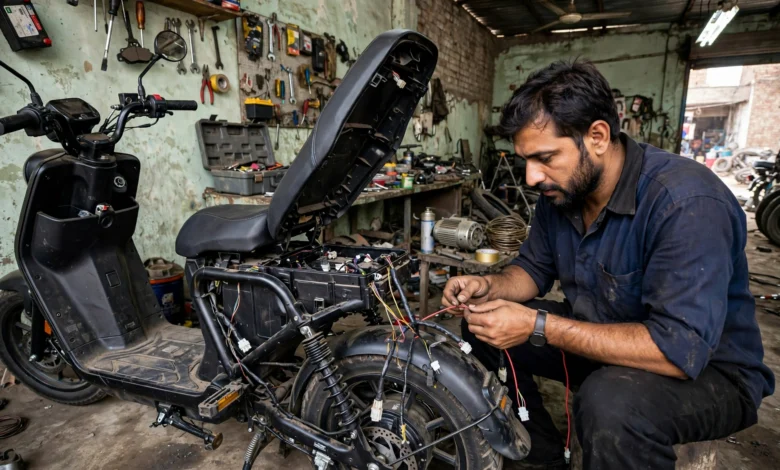
Electric bike quality problems in Pakistan have become impossible to ignore. As more commuters switch from petrol motorcycles to electric ones, chasing lower running costs, they’re running into a market that hasn’t caught up with demand. Cheap batteries, missing safety standards, and a regulatory system split across five different departments have turned what should be a straightforward upgrade into something closer to a gamble.
This isn’t a case of electric bikes being a bad idea. The core technology works fine elsewhere in the world. The problem in Pakistan is specific: weak enforcement, a grey market for refurbished batteries, and manufacturers who can legally sell a lead-acid bike as an “electric motorcycle” because no rule stops them. Buyers end up paying for lithium performance and getting something that dies in two years.
In this article, I’ll walk through what’s actually going wrong, why it’s happening, what the pros still look like when you buy carefully, and how to protect yourself if you’re thinking about buying an e-bike in Pakistan right now. I’ll also cover some of the documented illegal practices, like scrap battery refurbishing, that have shown up in recent government hearings, so you know exactly what to watch for before you hand over your money.
Why Electric Bike Quality Problems in Pakistan Are Getting Worse, Not Better
You’d expect quality to improve as an industry grows. In Pakistan’s case, growth arrived faster than oversight. Fuel prices have pushed thousands of riders toward electric motorcycles, and dozens of local brands have entered the market to meet that demand. But a recent National Assembly Standing Committee on Industries hearing laid out just how fragmented the system really is: no dedicated regulator, no lithium battery policy, and no effective mechanism to curb substandard products exists for the sector.
That’s not a minor gap. It means there’s genuinely nobody whose job it is to make sure the battery inside your new e-bike is what the seller says it is.
No Single Authority Oversees the Sector
Responsibility for electric two-wheelers is currently divided among several ministries and departments, which means manufacturing, certification, registration, and battery disposal are each handled separately, sometimes by agencies that don’t talk to each other. When something goes wrong, there’s no obvious place to complain.
Import Duties Have Created a Grey Market Problem
One of the most serious electric bike quality problems in Pakistan traces back to money, not engineering. High import duties on genuine lithium-ion batteries have made the economics of the grey market attractive, and the absence of enforcement has made it risk-free for the people running it.
Here’s how that plays out in practice:
- Used lithium-ion battery cells enter Pakistan as scrap, technically for recycling or disposal.
- Once inside the country, unlicensed and unregistered operators refurbish these scrap cells and sell them as functional battery packs for e-motorcycles.
- These refurbished packs get installed in bikes and sold to ordinary commuters with no way of knowing the cells started life as industrial waste.
This is the illegal activity that Pakistan’s own lawmakers have flagged as a live problem, not a theoretical one. It’s happening in the open, according to industry representatives who testified before the committee.

Common Electric Bike Quality Problems in Pakistan You Should Know About
Let’s get specific about what actually breaks, wears out, or misleads buyers.
1. Batteries That Die Within Two to Three Years
This is the single biggest complaint. Some manufacturers are installing low-quality batteries that could become unusable within two to three years, according to concerns raised directly in the parliamentary hearing. For a vehicle that’s supposed to be a five-to-ten-year investment, that’s a short lifespan.
The financial hit is real too. Consumers have reported paying as much as Rs90,000 for a replacement battery once the original one fails, which for many riders is a significant chunk of what they paid for the bike in the first place.
2. Lead-Acid Batteries Sold as “Electric Motorcycles”
This one surprises a lot of first-time buyers. Engineering Development Board (EDB) licenses don’t specifically require lithium-ion batteries, which has allowed some companies to install cheaper lead-acid dry batteries in bikes that are marketed and sold as modern electric motorcycles.
Why does this matter? Because lead-acid batteries and lithium-ion batteries are not comparable products:
- Lead-acid batteries are heavier, less energy-dense, charge more slowly, and degrade faster than lithium-ion alternatives
- Range drops noticeably compared to what’s advertised
- The environmental case for switching to electric weakens significantly, since the substitution removes much of the environmental benefit that makes electric vehicles worth promoting in the first place
A buyer who thinks they’re getting a lithium-powered bike, and paying accordingly, may be getting older, heavier technology dressed up in a new shell.
3. No Battery Testing Standards or Labs
Right now, there’s no reliable way for a buyer, or even a manufacturer, to independently verify what’s inside a battery pack before buying. The absence of recognized testing facilities and a clear complaint mechanism leaves buyers exposed to poor-quality or potentially unsafe battery packs. Committee members have called on the Pakistan Standards and Quality Control Authority (PSQCA) to build dedicated lithium battery testing labs, but that infrastructure doesn’t exist yet.
4. No Way to Report Illegal Battery Producers
Manufacturers themselves have raised this issue publicly. One industry representative directly asked the committee whether there was any forum at all where illegal battery manufacturers could be reported. If legitimate businesses don’t know where to file a complaint, ordinary consumers stand even less chance.
5. Currency and Import Dependence Driving Up Repair Costs
Since Pakistan remains heavily dependent on imported lithium-ion batteries, prices and repair costs stay exposed to currency movements, import duties, and supply disruptions. A weaker rupee or a customs delay can suddenly make a replacement battery far more expensive than a buyer originally budgeted for.
6. Fire and Safety Risk from Substandard Components
Battery safety isn’t just a Pakistan issue, but it’s a bigger risk when there’s no testing regime in place. Poorly built battery packs with weak internal wiring and no proper heat sensors have been linked to fires elsewhere, including cases where regulators pulled batteries from sale entirely after they were found to lack basic protection against thermal runaway. Committee members in Pakistan have specifically noted that electric two-wheelers pose safety risks that don’t exist with conventional petrol motorcycles if batteries or components fail, which is exactly why testing standards matter so much.
7. Confusing or Incomplete Vehicle Registration
Separate from battery issues, many buyers still get tripped up by e-bike registration requirements. Riding without proper registration isn’t just risky, it’s illegal, and traffic enforcement has become stricter. Unregistered bikes can face fines or be impounded outright, and skipping this step also makes resale and insurance harder down the line.
The Real Pros of Electric Bikes in Pakistan (When Bought Carefully)
None of this means electric bikes are a bad choice. It means the buying decision needs more care than it currently gets. When you pick the right bike from a transparent manufacturer, the upside is genuine.
- Lower running costs: Electricity per kilometer costs a fraction of petrol, especially with Pakistan’s fuel prices staying high.
- Lower maintenance: No oil changes, no exhaust system, fewer moving parts to fail.
- Government incentives: The Electric Vehicle Policy offers reduced registration fees and other benefits for e-bike owners.
- Quieter, cleaner commuting: No emissions at the point of use, and noticeably less noise in city traffic.
- Growing charging infrastructure: Slowly but steadily expanding, particularly in Lahore, Karachi, and Islamabad.
The pros are real. They just depend entirely on getting a bike with a genuine lithium battery, honest specs, and a manufacturer that stands behind its warranty.
Durability Factors That Actually Determine an E-Bike’s Lifespan
If you’re evaluating an electric bike, these are the factors that matter more than the marketing brochure.
Battery Chemistry and Cell Quality
Ask specifically whether the battery uses lithium-ion cells, and from which supplier. Vague answers are a warning sign. Genuine lithium-ion packs, properly made, should last several years under normal use; refurbished scrap cells often fail within months.
Battery Management System (BMS)
A proper BMS regulates charging, prevents overheating, and protects individual cells from damage. Cheap or missing BMS units are a major contributor to both premature battery death and fire risk.
Motor and Controller Build Quality
Hub motors and controllers vary enormously in quality between brands. Look for manufacturers who’ve been in the market for several years and have a visible service network, not just a showroom.
Frame and Weatherproofing
Pakistan’s climate is tough on vehicles, extreme heat in summer, dust, and monsoon flooding in some cities. A well-built frame with proper sealing around electrical components will hold up far better over time.
After-Sales Support and Warranty Terms
This is where a lot of buyers get burned. A warranty is only as good as the company backing it. Check how long the brand has actually operated in Pakistan, whether they have local spare parts stock, and whether other owners report getting warranty claims honored.
Charging Habits
Even a good battery degrades faster with poor charging practices. Avoid letting the battery sit fully drained for long periods, avoid extreme heat exposure while charging, and use only the charger provided by the manufacturer.
How to Protect Yourself When Buying an Electric Bike in Pakistan
Given everything above, here’s a practical checklist before you buy:
- Ask directly whether the battery is lithium-ion or lead-acid, and get it in writing on the invoice.
- Request the battery’s manufacturer and cell brand, not just the pack assembler’s name.
- Check for a warranty document, not just a verbal promise, and read the exclusions closely.
- Confirm the bike can be registered in your province and ask to see the relevant paperwork the dealer provides.
- Avoid unusually cheap deals that seem far below the market average for a “lithium” battery bike, since this is often where refurbished or lead-acid substitutions show up.
- Talk to existing owners, ideally people who’ve had the bike for over a year, not just recent buyers.
- Buy from manufacturers with a physical service center, not solely online resellers with no local presence.
None of these steps guarantee a perfect experience, but they significantly reduce your odds of ending up with one of the common failure points described above.
What Needs to Change at the Policy Level
The good news is that Pakistani authorities are aware of the problem. Engineering Development Board officials have said a new battery policy is being finalized that’s expected to address several of these gaps. For consumers, the priorities are clear:
- A dedicated regulatory body for electric two-wheelers, replacing the current fragmented setup
- Mandatory lithium-ion battery standards tied to EDB manufacturing licenses
- Functioning PSQCA testing labs for battery certification
- A public complaint channel for reporting illegal battery producers
- Stronger customs enforcement to stop scrap battery cells from re-entering the market as “new” packs
Until these are in place, the burden of due diligence sits mostly with the buyer.
Conclusion
Electric bike quality problems in Pakistan come down to a market that’s expanding faster than its regulation can keep up with. Grey market battery refurbishing, lead-acid substitutions sold as lithium power, missing testing labs, and no clear complaint system have all been confirmed directly by manufacturers and lawmakers in recent government hearings. None of this means electric bikes are a poor choice for Pakistani commuters, the running costs and government incentives remain genuinely attractive, but it does mean buyers need to ask harder questions before purchasing. Checking battery chemistry, warranty terms, registration paperwork, and a manufacturer’s service history will do more to protect your investment than any brochure claim. As policy catches up and testing infrastructure gets built out, the market should improve, but for now, an informed buyer is still the best defense against a bad purchase.