Top 15 Projects by CM Maryam Nawaz Transforming Punjab
Discover the top projects by CM Maryam Nawaz transforming Punjab — from free solar panels and Kissan Card to housing, health, and youth empowerment schemes.
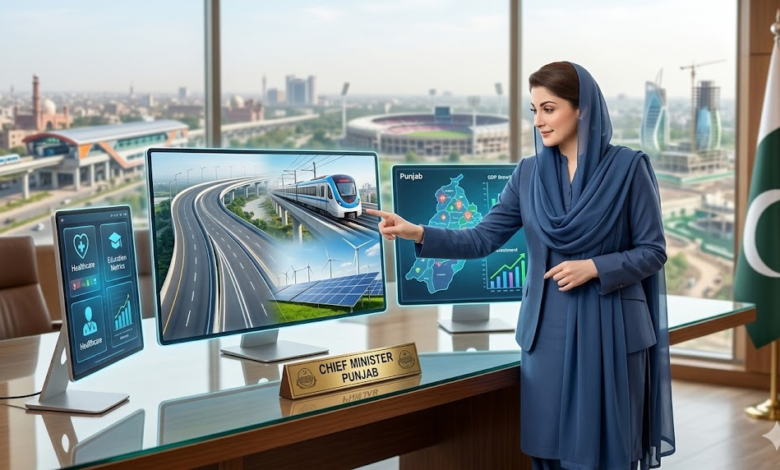
Top projects by CM Maryam Nawaz are reshaping Punjab in ways the province has not seen in years. Since she took oath as Pakistan’s first female Chief Minister on February 26, 2024, Maryam Nawaz Sharif has moved fast — and with intent. Rather than making promises and waiting, her government rolled out one initiative after another, touching virtually every sector of life in Punjab, from the fields of rural farmers to the classrooms of urban students, and from crumbling hospitals to the rooftops of low-income households.
What makes her approach different is that most of these programs come with real numbers, real budgets, and real registration portals. Citizens are not just being told something is coming — they are applying online, receiving cards, and accessing services. The Punjab government schemes 2025 under her leadership are built on the idea that governance should reach the last person, not just the easiest ones to serve.
This article breaks down the most significant and transformative projects of CM Maryam Nawaz in Punjab. Each one is explained in detail — what it does, who it helps, and why it matters for the province’s future. Whether you are a student, a farmer, a low-income household, or someone simply trying to understand how Punjab is changing, this guide gives you the full picture.
1. CM Punjab Free Solar Panel Scheme — Bringing Light to Every Home
What the Scheme Is About
The CM Punjab Free Solar Panel Scheme is one of the most talked-about initiatives of Maryam Nawaz’s government. Launched to tackle Pakistan’s chronic electricity crisis at the household level, this program provides free rooftop solar systems to low-income families across Punjab. The focus is especially strong on rural and off-grid areas where power outages are severe and prolonged.
Eligible households are those consuming between 0 and 200 electricity units per month, with a sanctioned load of up to 2 kW. Priority is given to families living in areas with frequent load-shedding or those who are entirely off-grid.
Why It Matters
Pakistan’s electricity bills have become one of the biggest financial burdens on ordinary families. This scheme directly attacks that burden by shifting qualifying homes to solar energy at zero upfront cost to the consumer. The result is not just cheaper electricity — it is the ability for children to study at night, for small home-based businesses to run without interruption, and for families to stop choosing between paying bills and buying food.
The CM Punjab Solar Panel Scheme also includes a parallel initiative for agricultural tube wells, called the CM Punjab Solarization of Tube Wells, where 8,000 agricultural tube wells are being converted to solar in the first phase. The government is offering subsidies ranging from Rs. 500,000 to Rs. 1 million depending on system size, covering up to 67% of installation costs. This directly reduces irrigation expenses for farmers and promotes sustainable agriculture in Punjab.
Key Benefits
- Free rooftop solar systems for eligible low-income households
- Priority to off-grid and high-outage areas
- Subsidy of up to Rs. 1 million for agricultural tube wells
- Reduces electricity costs and promotes green energy Punjab
- Creates employment in solar installation and manufacturing
2. Kissan Card — A Financial Lifeline for Punjab’s Farmers
What the Kissan Card Does
Agriculture is the backbone of Punjab’s economy, and yet farmers have historically struggled with access to affordable credit, quality inputs, and fair market prices. The Kissan Card changes that equation by giving registered farmers a digital card that allows them to purchase subsidized agricultural inputs, access interest-free loans, and benefit from government support directly — without going through layers of middlemen.
In July 2025, CM Maryam Nawaz approved Rs. 100 billion for 628,000 Kissan Card holders, which is the clearest signal yet about how seriously her government treats agricultural development in Punjab. The card is currently active and operational across the province, with bank registration still open for new applicants.

How It Works
Farmers register through the official portal, link their CNIC, and receive a digital card that can be used at designated vendors and agri-input suppliers. The government has also linked the Kissan Card to the Green Tractor Scheme, which aims to distribute 30,000 subsidized tractors to farmers — with 9,500 allocated immediately and a Rs. 1 million subsidy per tractor approved by the Punjab cabinet.
Why This Is Significant
For a province where millions of small-scale farmers own under 25 acres of land, access to a subsidized tractor or affordable seed and fertilizer can be the difference between a profitable harvest and a debt spiral. The Kissan Card Punjab addresses this by cutting the bureaucracy and putting financial tools directly in the hands of the people who grow the food.
3. Apni Chhat Apna Ghar — Affordable Housing for Low-Income Families
The Housing Problem in Punjab
Home ownership has been an unreachable dream for millions of Punjab’s low-income residents for decades. Land prices in urban centers are sky-high, and private bank mortgages come with interest rates and documentation requirements that put them out of reach for daily-wage workers and small traders.
How This Scheme Works
The Apni Chhat Apna Ghar housing scheme, approved by the Punjab cabinet, offers loans of Rs. 1.5 million with monthly instalments of just Rs. 14,000 over nine years. CM Maryam Nawaz also directed that the loan be structured as a revolving fund without additional charges, and simplified the application process to make it genuinely accessible.
Alongside this, the government launched the Apni Zameen Apna Ghar (AZAG) Scheme 2025, which goes even further — offering free 3-marla residential plots to deserving and low-income families. The program is managed by the Punjab Housing and Town Planning Agency (PHATA) and eligibility requires that the applicant be a permanent Punjab resident, own no existing property, have a clean criminal record, and not be a bank defaulter.
What This Means on the Ground
For families who have been renting for their entire lives with no path to ownership, these two schemes represent a genuine change in circumstances. The combination of subsidized loans and free plot allocations is one of the most comprehensive housing pushes Punjab has seen, and it directly addresses one of the province’s most persistent sources of poverty and insecurity.
4. CM Punjab Laptop Scheme — Closing the Digital Divide
The Scale of the Program
The CM Punjab Laptop Scheme is a flagship education initiative that plans to distribute 100,000 laptops to deserving students across Punjab, from matric to postgraduate levels. The devices being distributed are 13th-generation laptops with Core i7 processors — not budget machines, but genuinely capable tools for serious academic work.
What makes this scheme stand out from earlier laptop programs is the attention to inclusion. The government has committed to giving laptops to 2,000 minority students specifically, while students from South Punjab — a historically underserved region — will make up 32% of recipients.
Why Digital Access Matters
Access to a personal computer is no longer a luxury for students — it is a necessity. Without it, students in public universities are competing at a disadvantage against peers who have devices for research, assignments, coding, and online learning. The CM Punjab Free Laptop Initiative levels that playing field in a practical way.
Phase 2 of the scheme has also been announced, keeping the program active and expanding. Students who qualify based on merit in secondary and higher secondary examinations are prioritized, making it a performance-based incentive that also serves as recognition for academic achievement.
5. Punjab Sehat Card / Health Card — Healthcare as a Right, Not a Privilege
The Vision Behind It
The Punjab Sehat Card 2025, one of the most popular Maryam Nawaz government projects, is built on a simple but powerful idea: no family in Punjab should have to choose between medical treatment and financial survival. The card provides cashless access to healthcare services at empaneled hospitals across the province.
The program covers hospitalizations, surgeries, maternity care, chronic disease management, and specialized treatments including dialysis, heart surgeries, and organ transplants. Low-income families, senior citizens, and individuals with disabilities are the primary beneficiaries.
Innovations in Healthcare Delivery
What sets CM Maryam Nawaz’s healthcare push apart from a basic health card is the additional infrastructure being built around it. Her government launched the Clinic on Wheels — mobile health units that bring free medical checkups, maternal care, and lab services to urban slums and rural areas. There are also health clinics operating on boats to reach communities along Punjab’s waterways.
The Children Heart Surgery Program deserves special mention. Free surgeries for children with congenital heart disease have given families a chance at life that money simply could not have bought before. According to WHO data on Pakistan’s healthcare burden, congenital heart disease is one of the leading causes of child mortality in the country, making this program medically and humanly significant.
Public Hospital Upgrades
Rather than relying entirely on private hospitals, the government is also investing directly in public hospital infrastructure — funding medicines, equipment, and service delivery improvements from the provincial budget. This dual approach means that even without the card, citizens accessing public hospitals are getting better care than before.
6. Dhee Rani Programme — Dignity for Underprivileged Women
Who It Helps
The Punjab Dhee Rani Programme is one of the most emotionally resonant initiatives of Maryam Nawaz’s tenure. Launched in 2024, it targets destitute, orphaned, and differently-abled women aged 18 to 40, as well as daughters of persons with disabilities. The goal is simple: ensure that every girl, regardless of how poor her family is, can be married with dignity.
What the Programme Provides
Each beneficiary receives a dowry package valued at PKR 206,000, comprising furniture, kitchen utensils, and clothing, along with a cash gift of PKR 100,000 delivered via an ATM card. The government also organizes collective wedding ceremonies, covers venue expenses, and provides meals for up to 20 guests per couple.
In its first phase, the Dhee Rani Programme facilitated 1,500 marriages with a total allocation of PKR 1 billion. A second phase has since been opened, targeting an additional 1,500 couples.
The Broader Significance
In a society where the inability to afford a wedding often leads to families staying in poverty or girls remaining unmarried well into their adult lives, this program addresses a deep social problem with direct, dignified intervention. It also signals that CM Maryam Nawaz’s government understands that women empowerment in Punjab is not just about jobs — it is also about removing the financial barriers that trap families in cycles of poverty.
7. CM Asaan Karobar Finance Scheme — Interest-Free Business Loans
The Problem It Solves
Entrepreneurship in Punjab is stifled by one major barrier: access to capital. Traditional bank loans require collateral, high credit scores, and come with interest rates that are unaffordable for most small business owners. As a result, countless people with viable business ideas never get started, or operate at a scale far below their potential.
What the Scheme Offers
The CM Punjab Asaan Karobar Finance Scheme provides interest-free loans ranging from Rs. 100,000 to Rs. 3 million for individuals who want to start or expand a business. The application process is digital, reducing the bureaucratic friction that has historically made government loan programs unapproachable for ordinary citizens.
This is one of the best Punjab business loan schemes 2025 available and has attracted significant interest from young entrepreneurs, women-led businesses, and small traders across the province. The program is part of a broader vision for economic empowerment in Punjab that runs through much of CM Maryam Nawaz’s policy agenda.
8. CM E-Bike and E-Taxi Schemes — Greener Transport for Punjab
E-Bikes for Students
The CM Punjab E-Bike Scheme distributes 10,000 electric bikes free of charge to students who meet eligibility criteria. The aim is twofold: reduce the financial burden of commuting for students from low-income households, and contribute to reducing air pollution in Punjab’s cities. Winners of the Khelta Punjab Games 2025 also receive E-bikes as prizes, connecting sports participation with tangible rewards.
E-Taxi for Urban Mobility
The CM Punjab E-Taxi Scheme 2025 is a larger urban mobility project. With a Rs. 3.5 billion subsidy, it introduces 1,100 electric taxis in Lahore under a pilot project, with planned expansion to Faisalabad and Multan. The scheme is designed to empower youth and women drivers with eco-friendly livelihoods while improving public transport quality in major cities.
The combination of e-bikes and electric taxis is part of a coherent strategy to reduce Punjab’s dependence on petrol-powered transport and move toward sustainable urban mobility — a shift that is both environmental and economic in its logic. For more context on how electric transport is changing developing countries, the International Energy Agency’s EV Outlook provides useful benchmarking data.
9. CM Punjab Ration Card — Food Security for the Most Vulnerable
What It Is
The CM Punjab Ration Card 2025 targets the province’s most economically vulnerable families, offering them subsidized access to essential food items including wheat flour, rice, pulses, sugar, and cooking oil. The program is structured as a cashless system, operable through designated grocery outlets that accept the card as payment.
Under the updated design of the program, eligible families receive Rs. 10,000 in direct cash transfers rather than fixed food packages, giving them the flexibility to decide what they need most. This shift from in-kind to cash-based support reflects a more respectful and practical approach to poverty alleviation.
Why It Is Important
Food insecurity in Punjab is a real and persistent problem, worsened by inflation and rising commodity prices. The CM Rashan Card gives families a monthly cushion that reduces the pressure of grocery spending, leaving more room in the household budget for health, education, and other essentials. Registration is available both online through pser.punjab.gov.pk and offline through Punjab Social Welfare Offices.
10. Magnificent Punjab Tourism Initiative — Reviving Punjab’s Heritage
The Vision
Punjab is home to thousands of years of history, from the Indus Valley Civilization to Mughal monuments to Sikh religious sites. Yet, before CM Maryam Nawaz’s government, there was no coherent, well-funded plan to turn that heritage into a tourism economy.
The Magnificent Punjab initiative changes that. The government has directed the formation of a Punjab Tourism and Heritage Authority, enacted the Punjab Tourism and Heritage Authority Act 2024, and divided the entire province into nine “Tourist Trails” based on historical and cultural significance.
What Is Being Built
The tourist trail system includes the Baba Guru Nanak Dev Ji route, the Cultural District on Mall Road Lahore, the Walled City, Mughal monuments on GT Road, the Salt Range, Bhati Gate, Taxila Gate, and Aimanabad. A safari train will run on these trails, and private-sector tourists will receive special discounts.
Rs. 240 million has been approved to transform the 131-year-old Lahore Museum into a modern facility. Funds have been released for the restoration of the Qasim Bagh Fort. The UNESCO-partnered effort to preserve 1,000 years of Punjab’s cultural history includes digital storytelling — tourists will be able to access Punjab’s folk tales, Sufi traditions, music, and history through a dedicated mobile app.
The Tourism Internship Program
Connected to this initiative, the Magnificent Punjab Tourism Internship Program (MPIP) 2025 offers 1,000 paid internships with a monthly stipend of PKR 60,000 to young graduates in fields including Tourism and Hospitality Management, History, Archaeology, and IT. The first batch of 250 interns started in March 2025.
11. CM Punjab Honhaar Scholarship — Merit-Based Education Support
What It Covers
The Honhaar Scholarship Programme is one of CM Maryam Nawaz’s most impactful moves in education. Designed as a merit-based scholarship, it targets high-achieving students from public sector institutions who lack the financial means to continue higher education. Phase 2 of the scholarship was announced in 2025 with an expanded portal and broader eligibility.
This program complements the Laptop Scheme by addressing the cost of education directly — ensuring that students who earn their place at a university are not forced to drop out because they cannot afford fees, accommodation, or study materials.
12. Green Punjab and Suthra Punjab — A Cleaner, Greener Province
Two Complementary Programs
Green Punjab focuses on tree plantation, environmental restoration, and climate resilience across the province. Alongside it, Suthra Punjab (Clean Punjab) is a province-wide cleanliness and sanitation drive aimed at improving public hygiene, waste management, and the general livability of Punjab’s cities and towns.
The CM Punjab Green Credit Program 2025 — Pakistan’s first of its kind — rewards citizens financially for taking green actions. Participants can earn Rs. 10,000 for verified green behaviors, turning environmental responsibility into an economic incentive. This innovative approach reflects the kind of creative governance that sets Maryam Nawaz’s administration apart from traditional bureaucratic thinking.
13. Air Punjab — Punjab’s First Provincial Airline
A Bold Infrastructure Move
In one of the most forward-looking announcements of her tenure, CM Maryam Nawaz gave formal approval for the launch of Air Punjab — the province’s first-ever airline project. This is not a small administrative decision; it represents a fundamental shift in how Punjab sees its future connectivity with the rest of Pakistan and the world.
The airline project, once operational, will improve connectivity for business, tourism, and emergency services across a province of over 110 million people. It signals that the Punjab development projects 2025 agenda is not limited to social welfare — it has genuine economic infrastructure ambitions.
14. CM Punjab Minority Card — Inclusion for Non-Muslim Communities
Breaking Ground on Religious Inclusion
The CM Punjab Minority Card 2025 is a landmark welfare initiative that provides quarterly financial assistance of PKR 10,500 to eligible non-Muslim minority families, including Christians, Hindus, Sikhs, and other communities. It helps them manage essential household expenses, education costs, and healthcare needs.
This program is significant not just for what it provides, but for what it says: that the Punjab government under Maryam Nawaz intends to govern inclusively. Minority communities in Pakistan have historically been among the most economically marginalized groups, and this program directly acknowledges and addresses that reality.
15. Clinic on Wheels and Children’s Heart Surgery Program — Healthcare That Reaches Everyone
Mobile Healthcare for Remote Areas
The Clinic on Wheels program deploys mobile healthcare vans offering free medical checkups, maternal care, and lab services in rural areas, urban slums, and flood-affected regions. For communities far from hospitals or in areas where the nearest clinic is an impractical distance away, these mobile units bring the healthcare system to the people, rather than expecting the people to come to the system.
Free Heart Surgeries for Children
The Children’s Heart Surgery Program provides free cardiac surgeries to children born with congenital heart conditions. Pakistan has one of the highest rates of congenital heart defects in the region, and the cost of surgery is devastating for most families. This program removes that financial barrier entirely, saving lives that would otherwise be lost not to medicine’s limits, but to poverty.
The Bigger Picture: What These Projects Say About Punjab’s Direction
Looking at all of these initiatives together, a clear pattern emerges. CM Maryam Nawaz’s government is operating on a few core principles: get help to people directly and digitally, reduce dependence on fossil fuels, close the gap between wealthy and poor citizens in education and healthcare, and build the economic infrastructure Punjab needs to grow independently.
The Punjab government schemes 2025 are notable not just for their number but for their design. Most of them bypass traditional bureaucratic channels — instead of requiring citizens to navigate offices and paperwork, they offer online registration through dedicated portals, CNIC-based verification, and digital cards that work at the point of need.
The total provincial budget allocation for social welfare in fiscal year 2025-2026 stood at a historic PKR 950 billion, a 35% increase from the previous year. That number reflects a government that is genuinely committing financial resources to match its policy ambitions.
Conclusion
CM Maryam Nawaz’s top projects transforming Punjab represent one of the most ambitious and wide-ranging governance programs in the province’s recent history. From the Free Solar Panel Scheme and Kissan Card to the Apni Chhat Apna Ghar housing initiative, Punjab Sehat Card, Laptop Scheme, Dhee Rani Programme, Magnificent Punjab tourism drive, and the landmark approval of Air Punjab, her government has touched virtually every major sector of public life. The common thread running through all of these initiatives is a clear intent to build a Punjab where economic opportunity, healthcare, education, and basic dignity are accessible to every citizen — regardless of income, gender, or geography. For a province of over 110 million people navigating inflation, energy shortages, and historical inequalities, these projects represent not just policy, but a serious attempt at transformation.