Hajj 2027: The Complete Guide to Packages, Costs, and Essential Details for Pakistanis
Hajj 2027 brings a new four-year policy for Pakistan, with updated packages, digital registration, and costs every pilgrim should know.
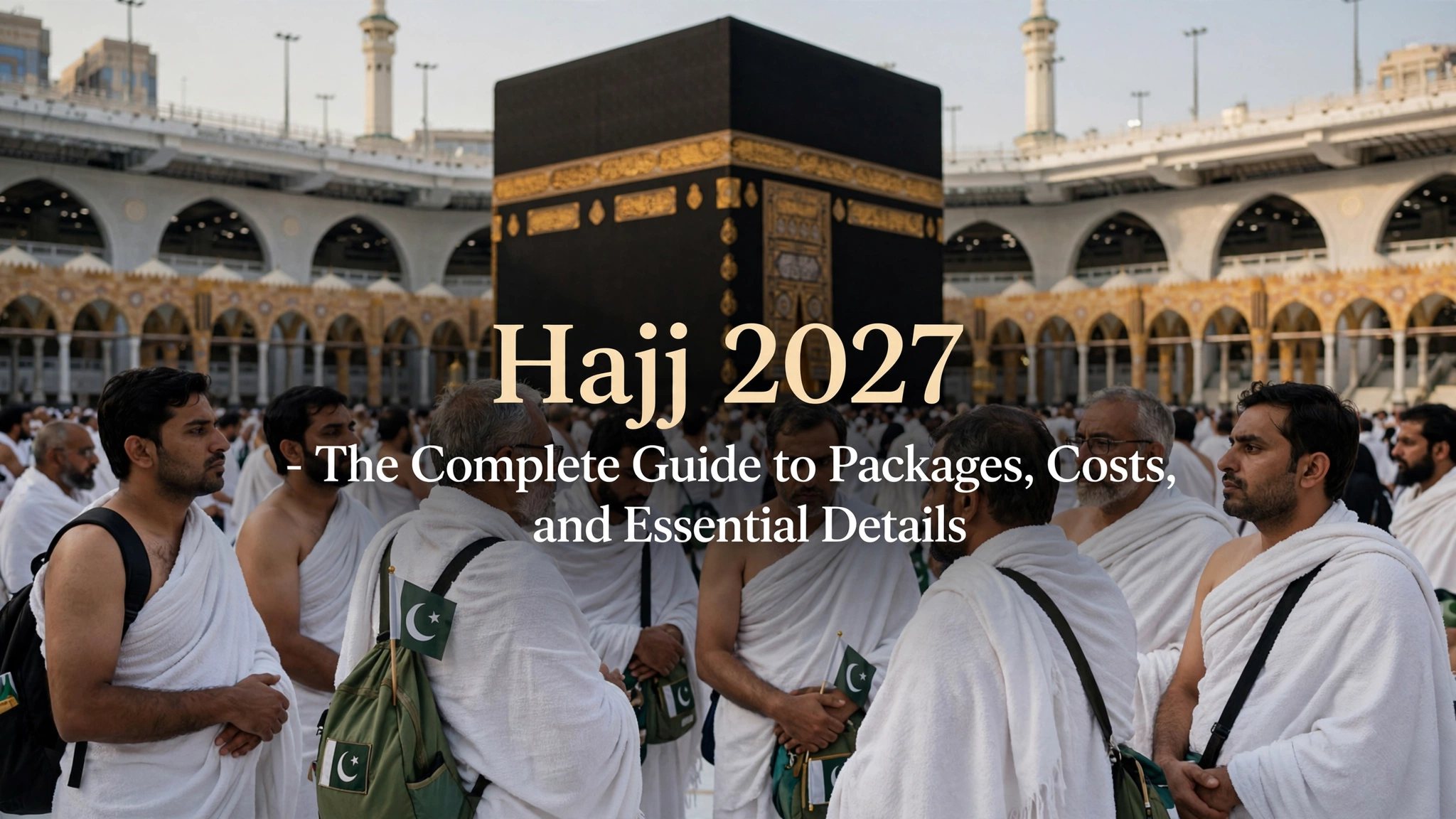
Hajj 2027 marks a turning point for pilgrims in Pakistan. For the first time, the Ministry of Religious Affairs has rolled out a four-year Hajj policy covering 2027 to 2030, replacing the old system where applicants had to register fresh every single year. If you’ve been putting off your Hajj plans because the process felt confusing or unpredictable, this new framework is worth paying attention to.
The government has introduced a digital waiting list, a savings scheme that lets you lock in your travel year early, and a fully online application process. Packages now come in two clear options, a long-duration and a short-duration scheme, so families can choose based on budget and how much time they can take off work.
This article breaks down everything Pakistani pilgrims need to know about Hajj 2027, including package prices, registration steps, required documents, quota details, and the major reforms that separate this policy from previous years. Whether you’re applying through the government scheme or a private operator, understanding these details now will save you time, money, and a lot of last-minute stress later. Let’s get into it.
What Is the Hajj Policy 2027-2030?
Pakistan’s Ministry of Religious Affairs and Interfaith Harmony has introduced a 16-page multi-year Hajj Policy covering Hajj 2027 through 2030. This is Pakistan’s first-ever four-year Hajj framework, and it changes how the whole system works.
Instead of applying and waiting each year with no guarantee of selection, pilgrims can now choose their preferred travel year in advance through a transparent digital registration and waiting list system. The idea behind this shift is to align Pakistan’s Hajj arrangements with Saudi Arabia’s own planning schedule, while making the process more predictable for families who need time to save and prepare.
Religious Affairs Minister Sardar Muhammad Yousaf explained that the government’s role is gradually moving away from directly running Hajj operations. Instead, it will act more as a regulator and quality assurance body, while private operators take on a bigger share of the arrangements. Longer-term contracts, running three to four years, are also being signed for accommodation, transport, catering, air travel, and cargo services. The goal is better service quality at a lower operational cost, since suppliers no longer need to renegotiate every single year.
Hajj 2027 Registration Process for Pakistanis
Digital Waiting List and Savings Scheme
One of the biggest changes under the new policy is the Hajj Savings Scheme. Under this system, applicants can deposit 10% of the estimated Hajj cost to secure priority registration for their preferred travel year, on a first-come, first-served basis. This means you don’t have to pay the full amount upfront, and you can plan your finances around a specific year instead of scrambling each cycle.
Pakistan started mandatory registration for Hajj 2027 back in June, and around 400,000 pre-registered individuals are now eligible to proceed with their applications and secure a place in the government scheme.
Fully Digital Application System
Pakistan has also digitized the entire Hajj 2027 process. Applications, payments, and document submissions now run through an integrated digital portal linked to NADRA and the State Bank of Pakistan. Paper-based cash transactions have been abolished altogether, and all financial dealings go through the State Bank and its digital payment partners.

For pilgrims, this means:
- No more standing in long queues at designated banks
- Payments and refunds processed electronically
- Application status trackable online
- Reduced risk of fraud or double bookings
According to officials, payments for the government scheme were set to begin on August 17, with applicants required to submit 50% of their selected package cost as the first installment.
Hajj 2027 Packages and Cost Breakdown
This is probably the part most families care about most: what will Hajj 2027 actually cost, and what do you get for that money?
Government Scheme Packages
Under the government scheme, Pakistan has allocated 107,526 slots for Hajj 2027, with two package options available:
- Long-duration package (38 to 42 days): Set at approximately Rs 1,200,000 (around $4,334)
- Short-duration package (20 to 25 days): Set at approximately Rs 1,300,000 (around $4,695)
It might seem odd that the shorter trip costs more, but this is consistent with previous years too. Shorter packages usually mean higher per-day accommodation and flight costs since there’s less time to spread out fixed expenses.
The government has reserved 30,000 slots specifically for the short Hajj package, and once that quota fills up, no further payments will be accepted under that scheme. Pilgrims select whichever option suits their schedule and budget, then pay half the package cost upfront, with the remaining balance collected before departure.
How Hajj 2027 Compares to Previous Years
For context, the 2026 government scheme cost around Rs 1.15 million for the long package and Rs 1.2 million for the short package, according to figures reported by ProPakistani. Pakistan has kept Hajj costs fairly stable over the last several cycles, and the Hajj 2027 pricing follows that same pattern, with a modest increase tied to currency exchange rates and Saudi accommodation costs.
Total government scheme expenditure for Hajj 2026 reached over Rs 139 billion across roughly 119,000 pilgrims, which works out to about Rs 1.17 million per person on average. Officials expect Hajj 2027 costs to stay in a similar range, though the exact final figure depends on the PKR-SAR exchange rate once contracts with Saudi service providers are finalized.
Private Hajj Packages for 2027
If you’d rather go through a private operator instead of the government scheme, the rules have changed here too. The Private Hajj Policy 2027–2030 replaces the old fixed-quota system with a performance and compliance-based framework. Here’s what private operators now need to meet:
- Registration with the Securities and Exchange Commission of Pakistan (SECP)
- Processing of pilgrim data through the official Private Hajj Management Portal
- Maintenance of required capital reserves
- A 5% performance guarantee to obtain a three-year license
- A minimum quota of 2,000 pilgrim bookings
Operators who fail to reach that 2,000-pilgrim threshold will be deactivated, half their security deposit will be forfeited, and their existing pilgrims will be automatically transferred to a compliant operator through the digital system. This is a meaningful shift from past years, when unused private quotas were a recurring problem. In 2025, a large chunk of the private allocation went unutilized due to technical and financial issues at various travel agencies, which is part of why the government tightened these rules.
Private packages typically include Maktab A or Maktab B accommodation in Mina. Maktab A offers closer proximity to Jamarat, air-conditioned tents, and upgraded facilities, while Maktab B is slightly farther out with standard facilities at a lower cost. Most private operators haven’t published finalized 2027 pricing yet, since bookings only open after the government confirms quota and permission for the private sector.
Hajj 2027 Quota for Pakistan
Understanding the quota system helps explain why timing your application matters so much. For the previous cycle, Pakistan’s total Hajj quota stood at 179,210 pilgrims, split roughly 66.5% for the government scheme and 33.5% for private operators. For Hajj 2027, the government scheme alone has been allocated 107,526 slots, and officials have indicated that the existing quota distribution will generally remain in place throughout the 2027–2030 policy period, unless the federal cabinet decides to revise it.
Because slots are filled on a first-come, first-served basis once payments open, pilgrims who complete their registration and initial deposit early have a much better shot at securing their preferred package and travel year.
Required Documents for Hajj 2027
Before you start the application process, it helps to have your paperwork ready. Based on standard Hajj documentation requirements and updated guidance for the 2027 cycle, Pakistani applicants generally need:
- Original valid Pakistani passport with a minimum of six months’ validity from the travel date, and blank pages available for visa stamping
- CNIC (Computerized National Identity Card) for identity verification through NADRA
- Recent passport-sized photographs meeting Saudi visa specifications
- Medical fitness certificate, including required vaccinations
- Proof of payment for the initial deposit or full package cost
- Mahram documentation for women under 45, or an official undertaking if traveling without one under the new rules (more on this below)
Biometric verification may also be required depending on how the final Hajj policy documentation is implemented. It’s worth double-checking passport validity early, since the Religious Ministry has already issued advisories reminding intending pilgrims to renew passports well ahead of their travel dates.
Major Reforms Under the New Hajj Policy
The Hajj Policy 2027–2030 isn’t just about packages and pricing. It introduces several social and regulatory changes worth knowing about.
Women Can Perform Hajj Without a Mahram
Under the new policy, women are now allowed to perform Hajj without a male guardian (Mahram), as long as they submit an official undertaking. This brings Pakistan’s policy closer in line with Saudi Arabia’s own relaxed guardianship rules for pilgrims, and it opens up Hajj to many women who previously couldn’t travel due to lack of an available Mahram.
Cashless, Fully Digital Payments
As mentioned earlier, all paper-based cash transactions have been abolished. Every payment now runs through the State Bank of Pakistan and integrated digital portals. This isn’t just a convenience upgrade, it’s meant to close loopholes that previously allowed mismanagement of pilgrim funds.
Mandatory Training for Pilgrims
The policy also introduces mandatory training programs covering Hajj rituals, Saudi laws, health and hygiene practices, and how to use the relevant mobile applications during the trip. This is a practical addition, especially for first-time pilgrims who may not be familiar with the physical demands or legal expectations of performing Hajj in Saudi Arabia.
Refund of Operational Surplus
If there’s any surplus left over after Hajj operations conclude, whether from unused services or cost savings, that amount will be refunded directly to pilgrims. In previous years, unclear handling of leftover funds was a common complaint, so this change adds a layer of accountability.
Important Dates for Hajj 2027
While the Ministry of Religious Affairs continues to release updates, here’s what’s confirmed so far for the Hajj 2027 cycle:
- Mandatory pre-registration for Hajj 2027 opened on June 22
- The federal cabinet approved the four-year Hajj policy shortly after
- Government scheme package prices were announced in early August
- Payments for selected packages were set to begin on August 17, with 50% due as the first installment
Applicants should keep an eye on the official Ministry of Religious Affairs website for updates on remaining balance deadlines, visa processing timelines, and departure schedules, since these are typically finalized closer to the travel season.
Tips for Pakistani Pilgrims Planning Hajj 2027
A few practical points worth keeping in mind as you plan:
- Register early. Since slots fill on a first-come, first-served basis, delaying your application could mean missing your preferred package or travel year entirely.
- Check your passport validity now. Renewal processing times can add unexpected delays, so don’t wait until the last minute.
- Budget for the full amount, not just the deposit. The 10% Hajj Savings Scheme deposit only secures your spot, the remaining balance still needs to be paid before departure.
- Decide between long and short packages based on your schedule, not just cost. The short package costs more per day but requires less time away from work or family responsibilities.
- If considering a private operator, verify their SECP registration and check whether they’re listed on the official Private Hajj Management Portal before making any payment.
- Attend the mandatory training sessions. They cover practical details about rituals, health precautions, and local laws that can genuinely make the trip smoother.
For official updates on quotas, payment schedules, and policy documents, pilgrims can refer directly to the Ministry of Religious Affairs and Interfaith Harmony, and for verified news coverage on package pricing and registration timelines, Arab News Pakistan has been publishing regular updates as the government finalizes details.
Conclusion
Hajj 2027 represents the biggest structural change to Pakistan’s Hajj system in years, moving from a year-by-year scramble to a planned, four-year framework with digital registration, clearer packages, and stronger accountability for private operators. Government scheme pilgrims can now choose between a long-duration package priced around Rs 1.2 million and a short-duration option closer to Rs 1.3 million, with payments handled entirely through digital channels. Add in reforms like Mahram-free travel for women, mandatory pilgrim training, and refunds for unused surplus funds, and it’s clear the Ministry is trying to make the whole process more transparent and pilgrim-friendly. If you’re planning to perform Hajj in 2027, the smartest move is to register early, keep your documents ready, and stay updated through official government channels as final dates and balances are confirmed.