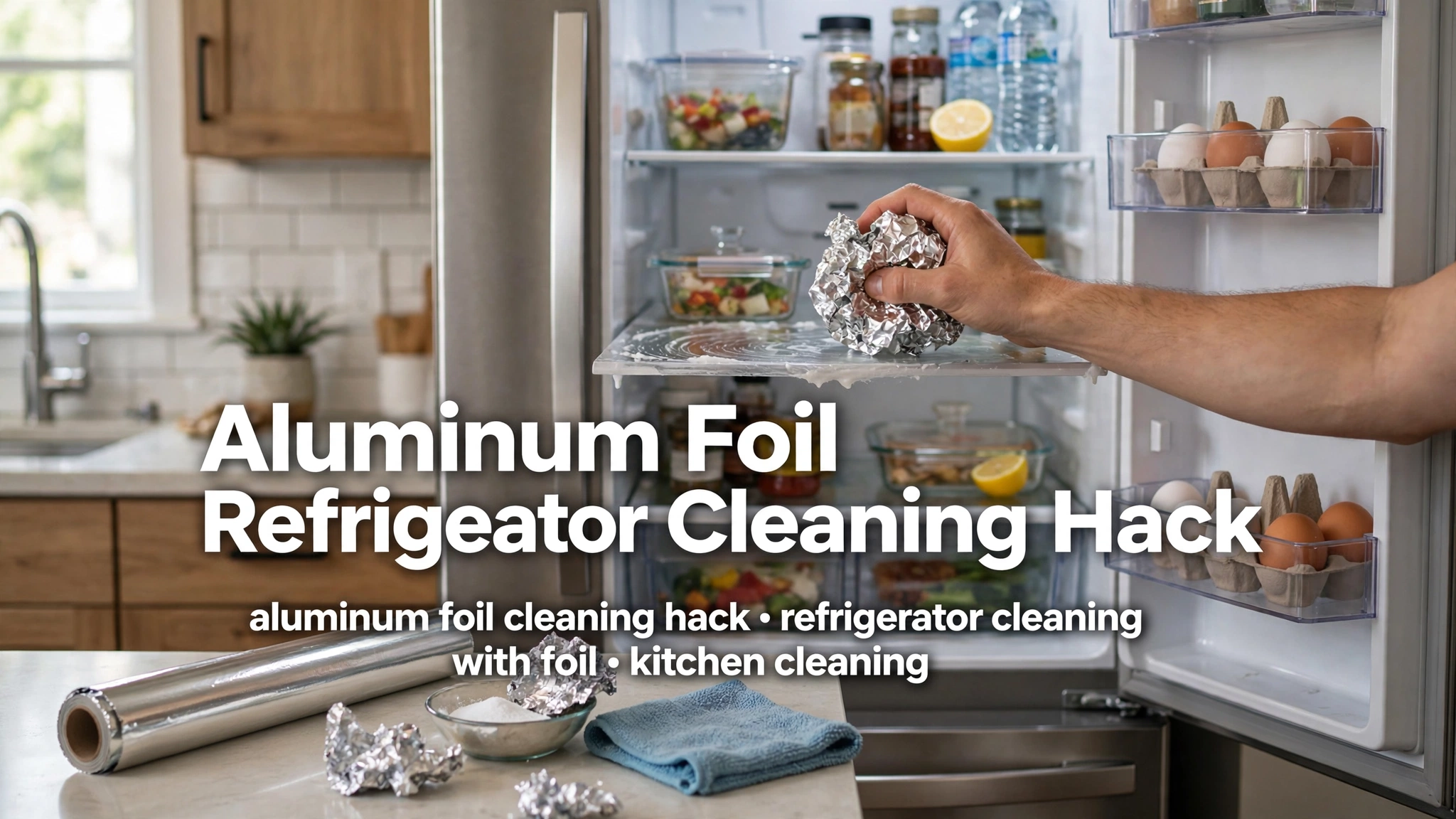
The aluminum foil hack to clean your refrigerator has been showing up on cleaning blogs and social media for a while now, and for good reason. It’s simple: line your fridge shelves and drawers with sheets of foil, and when spills happen, you toss the dirty sheet instead of scrubbing the shelf underneath. No harsh chemicals, no wasted Saturday morning, no dried-on tomato sauce that won’t budge.
But does it actually hold up in a real kitchen with real spills, real kids, and real leftovers that get pushed to the back and forgotten? That’s what this article breaks down. We’ll look at exactly how the aluminum foil refrigerator hack works, where it’s most useful, where it falls short, and how it compares to other fridge-cleaning methods people swear by. You’ll also get a step-by-step setup guide, a handful of bonus foil tricks for the rest of your kitchen, and honest answers to the questions people usually ask before trying it themselves.
If you’re tired of pulling out crusty shelves every few weeks, or you just want a lower-maintenance way to keep your fridge presentable, this guide should give you everything you need to decide if the hack is worth your roll of foil.
What Is the Aluminum Foil Hack to Clean Your Refrigerator?
At its core, the aluminum foil hack is a barrier method. Instead of cleaning your fridge shelves and drawers directly every time something leaks, you place a protective layer of foil on top of them first. Spills, drips, and food residue land on the foil rather than the shelf itself. When the foil gets messy, you peel it off, throw it away or wipe it down, and replace it with a fresh sheet.
It’s the same logic behind lining a baking sheet before roasting vegetables, just applied to your refrigerator shelves, crisper drawers, and door bins. The appeal is obvious: less scrubbing, less time spent with your head in the fridge, and a shelf that looks clean almost instantly.
This hack has picked up traction because it solves a specific annoyance. Refrigerator shelves are usually glass or textured plastic, and once a spill dries, it can take real effort with soap, water, and a scraper to get it fully clean. Foil sidesteps that problem by never letting the mess touch the shelf in the first place.
How the Aluminum Foil Refrigerator Hack Works
The Science Behind It
There’s no chemistry trick involved here, just basic physics. Aluminum foil is non-porous and water-resistant, so liquids sit on top of it instead of soaking in or bonding with the surface underneath. That’s the entire mechanism. It works the same way plastic wrap or wax paper would in theory, but foil holds its shape better, resists tearing more than plastic wrap, and can be molded around uneven shelf edges or drawer corners.
Because foil doesn’t absorb odors or stains the way porous materials do, it also tends to keep smells contained to the sheet itself rather than letting them work into your shelving.
Where to Use It Inside Your Fridge
Not every part of your refrigerator is a good candidate for this hack. The best spots are:


- Glass or plastic shelves, especially the ones directly under containers of soup, sauce, or marinated meat
- Crisper drawers, where wilted produce and vegetable juice tend to collect
- Door shelves, which catch drips from condiment bottles and juice cartons
- The bottom shelf, since it’s usually the first place a leak lands if something spills from above
Areas to avoid lining with foil include:
- Air vents or cooling sensors, since blocking airflow can affect how evenly your fridge cools
- Freezer walls, where foil tends to trap moisture and can actually make ice buildup worse rather than easier to remove
- Any surface where foil would touch food directly, particularly acidic foods like tomatoes or citrus, which can react with the metal over time
Step-by-Step: How to Use Aluminum Foil to Clean Your Refrigerator
If you want to try the aluminum foil hack yourself, here’s a straightforward process:
- Empty the shelf or drawer you plan to line. Take out all food items so you’re working with a clear, dry surface.
- Clean the shelf first. Wipe it down with warm water and a mild dish soap before laying anything on top. Foil works better as prevention than as a cover-up for an already dirty shelf.
- Measure and cut your foil to size, leaving a little extra so it can be tucked slightly at the edges without hanging over the sides.
- Lay the foil flat, shiny side up, smoothing out any wrinkles or air pockets so spills don’t pool underneath the sheet.
- Avoid covering vents, sensors, or drainage holes. Trim around them if needed.
- Replace food items on top of the lined surface as normal.
- Check the foil weekly and replace any sheet that’s torn, sagging, or visibly soiled.
- Recycle used foil where possible instead of throwing it straight in the trash, especially if it’s only lightly soiled and can be rinsed clean.
The whole setup takes maybe ten to fifteen minutes for an average fridge, and after that, cleanup for future spills takes seconds instead of minutes.
Benefits of the Aluminum Foil Refrigerator Hack
This trick isn’t just a novelty. There are a handful of genuine advantages that explain why it keeps resurfacing on cleaning and home-hack lists.
- Faster cleanup. Swapping a sheet of foil takes far less time than scrubbing a shelf covered in dried sauce or spilled milk.
- Fewer harsh chemicals. Because you’re removing the mess entirely rather than scrubbing it away, you don’t need to reach for heavy-duty cleaning sprays as often.
- Protects shelf material. Glass shelves can chip and plastic ones can scratch or stain over time. A foil barrier reduces direct wear and tear.
- Helps with organization. Some people use strips of foil to visually separate zones in the fridge, like dairy versus leftovers, making it easier to see what’s on hand.
- Reduces odor buildup. Because spills don’t sit and dry into the shelf material, there’s less chance of lingering smells developing over time.
- Low cost. A roll of foil costs a fraction of what specialty fridge liners or cleaning products run, and most households already have some in a kitchen drawer.
- Good for rentals. If you’re in a rental unit and want to avoid staining the fridge that came with the apartment, foil offers a removable layer of protection.
Does This Hack Have Any Drawbacks?
To be fair to anyone considering this, it’s worth being honest about where the hack comes up short.
Cleaning experts have pointed out that foil isn’t a flawless solution everywhere in the fridge. It tends to work well on flat, protected surfaces like shelves and drawers, but it’s a different story in the freezer. Lining freezer walls with foil to catch frost buildup, a hack that occasionally circulates alongside the fridge version, often does more harm than good. Foil in that setting can tear easily, shift out of place, and trap moisture against the walls rather than preventing ice from forming, which ends up creating more mess rather than less. Cleaning professionals have noted that if a freezer is building up excess frost, the better move is addressing the root cause, like a door seal that isn’t sealing properly, rather than reaching for foil as a workaround, according to House Digest.
Other drawbacks worth knowing:
- Foil can shift or crumple if items are dragged across it repeatedly, which can look messier than a bare shelf.
- It’s not reusable indefinitely. Once torn or heavily soiled, it needs to be replaced, which means an ongoing (if small) cost.
- It doesn’t address deep cleaning. Foil protects the shelf surface, but it won’t clean the interior walls, gaskets, or drawers you’re not actively lining.
- Environmental consideration. Regularly discarding foil adds to household waste unless you’re diligent about rinsing and recycling it.
None of these issues are dealbreakers for most households, but they’re reasons to treat this as one tool in your cleaning routine rather than a total replacement for occasionally wiping down your fridge properly.
Aluminum Foil Hack vs Other Refrigerator Cleaning Methods
It helps to see how this stacks up against other common approaches.
| Method | Effort Level | Cost | Best For |
|---|---|---|---|
| Aluminum foil liners | Low | Low | Preventing spill stains on shelves and drawers |
| Plastic fridge mats | Low-Medium | Medium | Reusable, washable protection |
| Baking soda and vinegar wipe-downs | Medium | Low | Deep cleaning and odor removal |
| Disposable shelf liners (paper) | Low | Low-Medium | Absorbing spills rather than blocking them |
| Full manual scrub | High | Low | Periodic deep cleans of the whole unit |
Foil tends to win on cost and convenience but loses to reusable plastic mats on long-term sustainability, since mats can be washed and reused for years rather than replaced every few weeks.
Other Genius Aluminum Foil Cleaning Hacks for Your Kitchen
Since a roll of foil is already doing double duty in your fridge, it’s worth knowing a few other places it earns its keep around the kitchen.
Cleaning Faucets and Chrome Fixtures
Balling up a small piece of foil and gently scrubbing it in circular motions can help remove water spots and mineral buildup from chrome faucets, according to Tom’s Guide. A quick polish with a microfiber cloth afterward brings back the shine.
Reviving Dull Flatware
Lining a heat-safe dish with foil, shiny side up, and soaking tarnished silverware in warm water mixed with baking soda can help reverse the chemical reaction that causes discoloration on flatware.
Lining Air Fryer Baskets
Placing foil underneath food (without blocking airflow or touching the heating element) can catch crumbs and grease, cutting down on how often you need to scrub the basket.
Scouring Pots and Pans
A crumpled ball of foil can double as a makeshift scouring pad for stuck-on food, offering an abrasive surface without scratching most cookware the way steel wool can.
These smaller hacks reinforce the bigger point: foil is a genuinely useful, low-cost tool for cutting down on scrubbing time throughout the kitchen, not just inside the fridge.
Tips to Get the Best Results
A few small habits make a noticeable difference in how well this hack performs long-term:
- Replace foil every one to two weeks, or sooner if it’s visibly soiled
- Keep a pre-cut stash of foil sheets sized to your shelves so swapping them takes seconds
- Use the shiny side up, since it tends to resist sticking slightly better than the dull side
- Wipe the actual shelf surface every month or two, even with foil in place, just to stay ahead of any residue that seeps through gaps
- Label foil-lined zones if you’re using it for organization, so everyone in the household knows where things go
Frequently Asked Questions
Does the aluminum foil hack work in the freezer too?
It’s less effective there. Foil can trap moisture against freezer walls and contribute to frost buildup rather than preventing it, so it’s generally better suited to the refrigerator compartment.
Is it safe to let food touch the foil directly?
It’s best avoided, particularly with acidic foods like tomatoes, citrus, or vinegar-based dishes, which can react with the metal over time. Use foil as a shelf liner underneath containers rather than as direct food wrap in the fridge.
How often should I change the foil?
Roughly every one to two weeks under normal use, or immediately after a spill soaks through or the sheet tears.
Will foil block my fridge’s airflow?
Only if it’s placed over vents or sensors. Keep those areas clear and airflow shouldn’t be affected.
Is this hack better than a store-bought fridge liner?
It depends on your priorities. Foil is cheaper and more disposable, while washable plastic liners cost more upfront but can be reused for a longer stretch, which some households find more sustainable.
Conclusion
The aluminum foil hack to clean your refrigerator is a simple, low-cost way to cut down on scrubbing by giving spills a disposable surface to land on instead of your actual shelves and drawers. It works well on shelves, crisper drawers, and door bins, and it pairs nicely with a handful of other foil-based kitchen tricks, from polishing faucets to reviving dull flatware. It’s not a perfect fix for every part of the fridge, especially the freezer, and it won’t replace an occasional deep clean, but as a way to make everyday maintenance faster and easier, it’s a trick worth keeping in your back pocket.