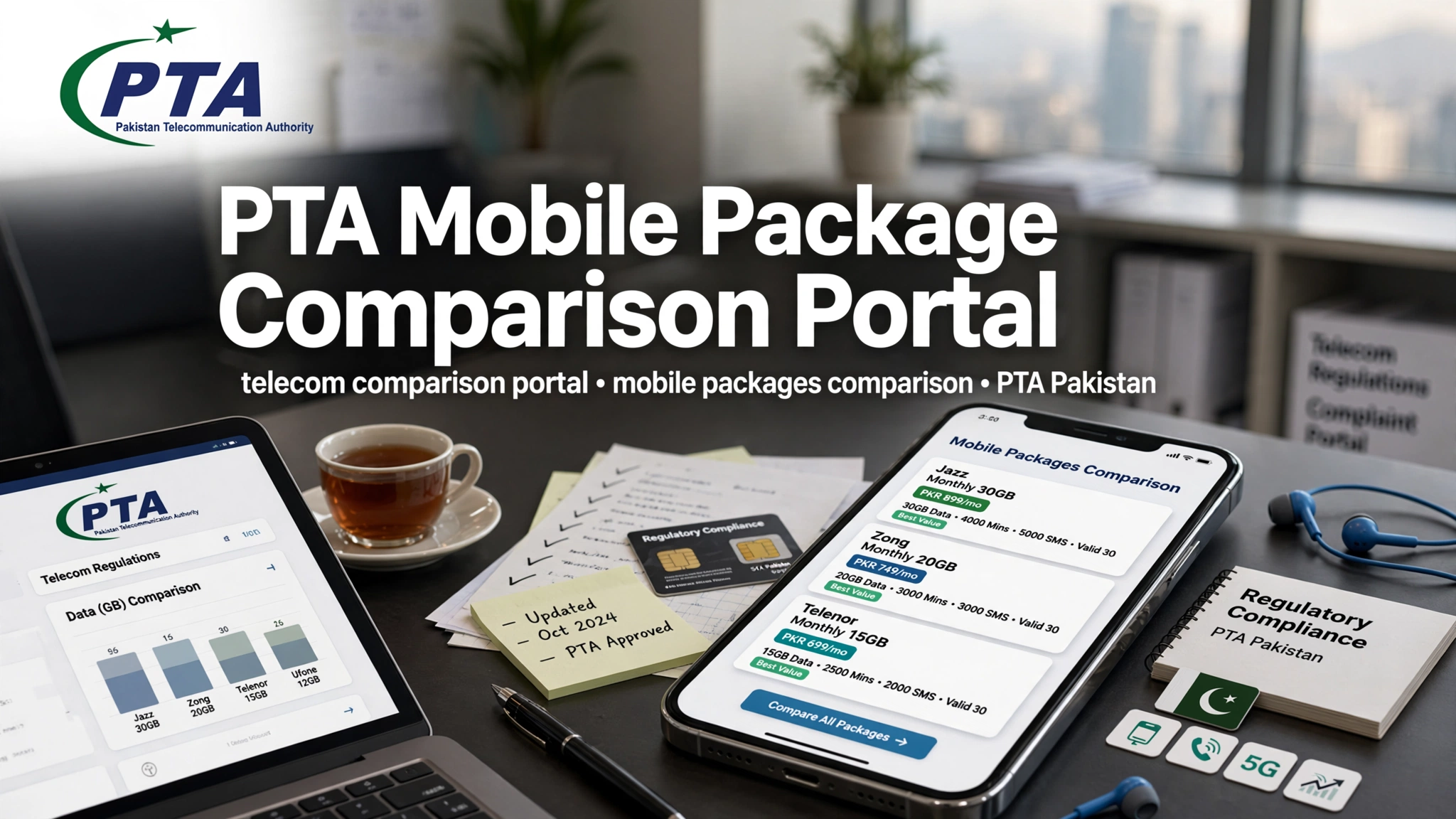
Choosing a mobile package in Pakistan has always meant jumping between apps, websites, and confusing SMS codes just to figure out which network actually offers the better deal. That’s changing now. The PTA mobile package comparison portal has been added to the Pakistan Telecommunication Authority’s official website, giving consumers a single place to check and compare packages from Jazz, Zong, Ufone, and Telenor Pakistan side by side.
The timing matters. Mobile tariffs across the country have been climbing steadily, with some packages costing up to a third more than they did a year ago. For everyday users trying to stretch a tight budget, that kind of price movement is hard to track without some help. This new portal was built specifically to close that gap by pulling pricing, validity, and benefit details from all four major operators into one consumer-facing tool.
In this article, we’ll walk through what the PTA mobile package comparison portal actually offers, how it works, why the regulator decided to build it now, and what it means for anyone trying to pick a smarter package. We’ll also look at how it fits into PTA’s broader push for tariff transparency and consumer protection in Pakistan’s telecom sector, and what to keep in mind while using it.
What Is the PTA Mobile Package Comparison Portal?
The PTA mobile package comparison portal is a free online tool hosted within the Consumer Awareness section of the Pakistan Telecommunication Authority’s official website. It was built to let mobile users in Pakistan compare hybrid, call, SMS, and data packages offered by the country’s four licensed cellular operators without having to check each company’s app or website separately.
Rather than acting as a marketing page for any single operator, the portal is designed to be neutral. It simply displays the facts side by side: what each package costs, how long it lasts, what it includes, and how its price has moved over recent quarters. That neutrality is really the whole point. PTA, as the regulator, isn’t trying to sell anyone a SIM card. It’s trying to make sure people aren’t stuck guessing.
Why PTA Built the Portal Now
Pakistan’s telecom sector has seen a wave of tariff revisions this year. PTA’s own updated tariff sheets showed monthly call and data bundles becoming more expensive by as much as Rs 500, while shorter packages like weekly and three-day bundles also saw smaller but noticeable price bumps. When price changes happen that often, across four different operators, keeping track of who offers the better deal becomes genuinely difficult for the average subscriber.
According to PTA, the goal of the mobile package comparison tool is straightforward: give consumers better visibility into pricing and market trends so they can make decisions that actually match their usage and their budget, rather than picking a package out of habit or convenience. The authority has said that better-informed consumers can make more suitable choices based on their usage, requirements, and budget, which helps them avoid unnecessary expenses.
How the PTA Package Comparison Tool Works
Using the portal doesn’t require any technical know-how. It’s built as a straightforward comparison table that pulls current data directly from PTA’s tariff records.
Here’s what the tool typically shows for each package:


- Operator name — Jazz, Zong, Ufone, or Telenor
- Package price — the current cost in rupees
- Validity period — how long the package lasts, from one day to a full month
- Data allowance — how many GBs of internet are included
- Call minutes and SMS limits — on-net and off-net where applicable
- Bonus features — extras like social media bundles or night packages
- Price history — how the package’s cost has changed over recent quarters
This last point is what sets the tool apart from most private comparison websites. Instead of only showing today’s price, the PTA tariff comparison portal also tracks quarterly tariff trends and annual percentage increases, so users can see exactly how much a package has gone up (or occasionally down) over time.
Packages Covered on the Portal
The comparison currently focuses on the most widely subscribed hybrid bundles across the four operators, based on actual subscriber numbers rather than every single package on the market. PTA has said the tool covers roughly the top ten hybrid bundles by popularity, along with a broader set of hybrid and data-only packages pulled from its updated tariff sheets.
This matters because it means the portal isn’t cluttered with obscure or rarely used offers. It’s built around the packages that most people are actually choosing between, which makes the comparisons far more useful in practice.
Operators Included in the PTA Comparison Portal
All four of Pakistan’s major cellular mobile operators are represented on the platform:
- Jazz — the country’s largest operator by subscriber base
- Zong — known for competitive data-heavy packages
- Ufone — a long-standing player with a strong prepaid customer base
- Telenor Pakistan — offers a mix of call, SMS, and data-focused bundles
Having all four networks on one screen means a user doesn’t have to visit four different apps or dial four different USSD codes just to compare a basic weekly internet bundle. That alone is a meaningful convenience upgrade for anyone recharging regularly.
Why Tariff Transparency Matters Right Now
It helps to understand the backdrop here. Telecom tariffs in Pakistan have risen noticeably this year, and PTA’s updated tariff sheets confirm it. Some hybrid and data-only packages saw increases of up to 33 percent year-on-year, with monthly bundles becoming as much as Rs 500 pricier and 15-day packages rising by up to Rs 300. Even short-term packages, like the ones people buy for a weekend trip or a few days of heavy data use, saw smaller but real price hikes.
When prices move this frequently, consumers are often the last to notice, especially if they’re on auto-renewal or just re-subscribing to whatever package they used last time. The PTA mobile package comparison portal directly addresses that blind spot by making price history and current rates visible in one place, rather than leaving people to rely on memory or word of mouth.
This is also part of a broader pattern. PTA has been steadily expanding its Consumer Awareness section over the past several months, adding clearer tariff sheets, quarterly trend data, and now this comparison tool. The regulator has framed all of it as part of its ongoing commitment to consumer protection and market transparency in the telecom industry.
Step-by-Step: How to Use the PTA Portal to Compare Packages
If you want to actually use the tool, here’s a simple walkthrough:
- Visit the official PTA website and navigate to the Consumer Awareness section.
- Locate the package comparison tool, which is listed alongside the updated tariff sheets.
- Select the operators you want to compare, or view all four at once.
- Filter by package type, such as monthly, weekly, or data-only bundles, depending on what you need.
- Review the details, including price, validity, data allowance, and included benefits.
- Check the price trend for that package to see whether it has increased recently and by how much.
- Compare across networks to see which operator currently offers the best value for your usage pattern.
It’s a quick process, and because the whole point of the tool is simplicity, there’s no login or account required to use it.
Benefits of the PTA Mobile Package Comparison Portal
There are a few clear advantages to having this kind of tool built and maintained directly by the regulator rather than a third-party website.
- Neutral, unbiased data — PTA has no incentive to favor one operator over another, so the comparisons aren’t influenced by advertising deals or affiliate arrangements.
- Official pricing accuracy — because the data comes straight from operator tariff filings, there’s less risk of outdated or incorrect package details.
- Historical price tracking — seeing how a package’s cost has changed over several quarters helps users spot patterns, like operators quietly raising prices around the same time each year.
- Time savings — one platform instead of four separate apps or websites.
- Better budgeting — knowing the real, current cost of a package before subscribing helps avoid the surprise of a higher-than-expected deduction.
For prepaid users especially, who make up the bulk of Pakistan’s mobile subscriber base, this kind of clarity can meaningfully change how they choose and renew packages every month.
How This Fits Into PTA’s Broader Consumer Protection Push
The comparison portal isn’t a standalone initiative. It’s part of a wider set of steps PTA has taken recently to protect consumers in the telecom space. Alongside the new tool, the authority has also:
- Published updated tariff sheets covering 15 hybrid and data-only packages with quarterly pricing detail
- Directed mobile operators to make it easier for customers to check and manage their active Value Added Services (VAS) subscriptions through operator-specific USSD codes
- Continued enforcement action against irregularities in the sector, including penalties issued to mobile companies over compliance violations
Together, these efforts point to a regulator that’s trying to give ordinary mobile users more control and more information, at a time when telecom costs are rising and packages can be genuinely confusing to compare.
For readers who want to dig into the source material directly, PTA’s own Consumer Awareness section publishes the tariff sheets and comparison data first-hand, and outlets like ProPakistani have covered the rollout of these consumer-facing tools in detail.
What Consumers Should Keep in Mind
A comparison portal is only as useful as the habits built around it. A few practical points worth remembering:
- Prices can change quickly. Since tariffs are being revised fairly often this year, it’s worth rechecking the portal before renewing a package you haven’t used in a while.
- Cheapest isn’t always best. A lower price with a shorter validity period or smaller data allowance might actually cost more per day of use.
- Cross-check with operator apps. PTA has advised users to also check operator-specific apps and websites, since promotional or limited-time offers may not always be reflected immediately on the comparison portal.
- Watch for VAS subscriptions. Unwanted Value Added Services can quietly add to your bill even if your base package is priced fairly, so it’s worth reviewing active subscriptions periodically.
Frequently Asked Questions
Is the PTA mobile package comparison portal free to use?
Yes. It’s a free tool available on PTA’s official website with no login or subscription required.
Which operators are included in the comparison?
Jazz, Zong, Ufone, and Telenor Pakistan are all covered.
Does the portal show price history, not just current rates?
Yes. It includes quarterly tariff trends and annual percentage price changes for the listed packages.
Where exactly is the tool located on PTA’s website?
It’s part of the Consumer Awareness section of the official PTA website.
Conclusion
The launch of the PTA mobile package comparison portal gives Pakistani mobile users something they’ve been missing for a while: a single, neutral place to compare prices, validity, and benefits across Jazz, Zong, Ufone, and Telenor without digging through four different apps. At a time when tariffs have been climbing across the board, that kind of visibility genuinely matters for household budgets. It’s a straightforward tool, but it fills a real gap, and it reflects PTA’s broader effort to keep the telecom sector transparent and accountable to the people actually paying for these services every month.