Punjab E-Taxi Scheme Explained: Benefits, Eligibility & More
Discover the Punjab E-Taxi Scheme: learn eligibility criteria, benefits, application process, and how to get electric taxis on interest-free installments in Pakistan.

The Punjab E-Taxi Scheme represents a major shift in how Pakistan approaches public transportation and unemployment. Launched by Chief Minister Maryam Nawaz Sharif, this initiative brings together environmental responsibility and economic opportunity in a single program. If you’ve been struggling with high fuel costs as a driver, or if you’re unemployed and looking for a stable income source, this scheme might be exactly what you need.
The program offers electric taxis on interest-free installments to eligible residents of Punjab. Instead of spending thousands on petrol every month, drivers can operate clean, modern vehicles that run on electricity. The government has committed 3.5 billion rupees to make this happen, starting with 1,100 vehicles in Lahore as a pilot project. But this is more than just about vehicles. It’s about giving people a chance to build their own business, reduce air pollution in cities like Lahore and Faisalabad, and move Pakistan closer to sustainable energy goals. With partnerships between the Transport Department and the Bank of Punjab, the scheme creates a complete support system including financing, charging infrastructure, and training for new drivers.
What Is the Punjab E-Taxi Scheme?
The CM Punjab E-Taxi Scheme is a government-backed program that provides electric vehicles to qualified applicants through easy monthly installments. Unlike traditional vehicle loans, this program comes with zero interest charges. The government covers the markup, token tax, and registration fees, making it significantly more affordable than buying a vehicle through commercial financing.
This initiative falls under Chief Minister Maryam Nawaz’s Green and Clean Transport vision. The goal is simple: replace conventional fuel-based taxis with electric vehicles that produce zero emissions. The scheme targets unemployed youth, existing taxi drivers, and women who want to enter the transport sector.
Key Features of the Program
The Punjab E-Taxi Scheme 2025 includes several important features that set it apart from other vehicle schemes:
Government Subsidy and Support The Punjab government provides substantial financial backing. They cover markup charges that would normally add thousands to your monthly payments. Token tax and registration fees, which can cost 50,000 to 100,000 rupees, are paid by the government. This reduces the financial burden on drivers significantly.
Partnership with Bank of Punjab Financing goes through the Bank of Punjab, which handles all loan processing and installment management. The bank offers up to PKR 6.5 million in financing per vehicle. Any amount beyond this limit would be the buyer’s responsibility, though most approved vehicles fall within this range.
Fleet and Individual Options The program accommodates both individual drivers and fleet owners. Fleet operators must purchase a minimum of 10 vehicles. Out of the initial 1,100 taxis, 1,000 are allocated to fleet operators and 100 to individual drivers. This structure helps scale up the program quickly while still supporting independent drivers.
Women’s Quota Between 30 to 100 vehicles are specifically reserved for women drivers. This quota encourages female participation in a traditionally male-dominated sector and promotes economic independence for women.


Eligibility Requirements for the E-Taxi Scheme
Getting approved for the Green E-Taxi Scheme requires meeting specific criteria. The government has set these requirements to ensure the program reaches people who genuinely need support.
Basic Eligibility Criteria
Age Requirements You must be between 21 and 45 years old. Some sources mention 21 to 35 years, but most official communications specify the 21 to 45 range. Your age is calculated as of January 1, 2025.
Residency and Documentation You need permanent residency in Punjab, proven through a valid Punjab domicile certificate from any district. Your CNIC must be active and match all other documents. Proof of residence, typically a utility bill in your name, is also required.
Driving License A valid Light Transport Vehicle (LTV) license is mandatory. The license should be issued before March 1, 2025, according to most program guidelines. Some sources accept a learner’s license if you commit to upgrading it, but this varies by application round.
Financial Standing You cannot be a defaulter of any bank loan. The application process includes verification through NADRA and banking channels. If you have outstanding loans or a history of defaults, your application will likely be rejected.
Employment Status Priority goes to unemployed individuals or those earning less than PKR 30,000 per month. You’ll need to provide an affidavit declaring your income status. Recent graduates and people without stable employment get preference.
Vehicle Ownership You must not own any vehicle registered in your name. This ensures the program benefits people who don’t already have their own transport.
Criminal Record A clean police clearance certificate is required. Any criminal history may disqualify your application.
Special Considerations
The program gives special consideration to several groups. Women applicants receive priority through the reserved quota. People with disabilities who meet the driving and licensing requirements can also apply. The government has indicated that rural residents will be considered in later phases as the program expands beyond major cities.
Benefits of the Punjab E-Taxi Scheme
The Punjab electric vehicles program offers multiple advantages for drivers, passengers, and the environment. Let’s break down what makes this initiative valuable.
Financial Benefits
Massive Fuel Savings Electric taxis eliminate petrol costs entirely. A typical Lahore taxi driver spends 40,000 to 50,000 rupees monthly on fuel. With an electric taxi, electricity costs for charging range from 10,000 to 15,000 rupees per month. That’s a saving of 25,000 to 35,000 rupees every month.
Lower Maintenance Costs Electric vehicles have fewer moving parts than petrol vehicles. There’s no engine oil to change, no spark plugs to replace, and fewer components that can break down. Maintenance costs drop by an estimated 40% compared to conventional taxis.
Interest-Free Financing The zero-markup installment plan saves drivers lakhs of rupees over the loan period. Commercial vehicle loans typically charge 15% to 20% interest annually. By eliminating this cost, the government makes vehicle ownership accessible to people who couldn’t afford market-rate loans.
Government-Paid Registration Costs Token tax and registration charges, which together can exceed 100,000 rupees, are covered by the Punjab government. This removes a significant upfront barrier that prevents many drivers from acquiring new vehicles.
Environmental Impact
The Green E-Taxi Scheme directly addresses Punjab’s air quality crisis. Cities like Lahore regularly rank among the world’s most polluted. Electric taxis produce zero tailpipe emissions, helping reduce smog and respiratory problems.
The program aims to cut annual CO2 emissions by over 20,000 tons in its first phase alone. As more vehicles join the fleet, this environmental benefit multiplies. The shift to electric power also reduces Pakistan’s dependence on imported fuel, supporting national energy security.
Professional Development
Selected drivers receive comprehensive training before taking delivery of their vehicles. Training covers electric vehicle operation, battery maintenance, charging protocols, and safety procedures. This knowledge transfer helps drivers adapt to new technology confidently.
The program also connects drivers with ride-hailing platforms like InDrive, Yango, and Careem. During the installment period, drivers must use these platforms, ensuring immediate income generation. After full repayment, owners can use the vehicle however they choose.
Infrastructure Support
The government is building extensive charging infrastructure across Punjab. Plans include 120 charging hubs in major cities and along highways. Fast chargers are being installed on the M-2, M-3, and M-4 motorways, enabling long-distance travel without range anxiety.
A monthly subsidy of PKR 10,000 helps offset electricity costs for charging. This subsidy recognizes that even though electricity is cheaper than petrol, drivers still need support during the transition period.
How to Apply for the CM Punjab E-Taxi Scheme
The application process for the Punjab E-Taxi Scheme online is straightforward but requires attention to detail. Here’s what you need to know.
Application Process Step by Step
Step 1: Document Preparation Gather all required documents before starting your application. You’ll need your original CNIC and photocopies, your valid driving license (LTV), Punjab domicile certificate, a recent passport-sized photograph, proof of residence such as a utility bill, your educational certificates if you’re a recent graduate, and a police clearance certificate showing no criminal record.
Step 2: Portal Access Visit the official registration portal. The primary website is transport.punjab.gov.pk, though several related portals have been set up for convenience. Look for the E-Taxi Scheme section or online application link. Some sources mention e-taxi.punjab.gov.pk as the dedicated portal.
Step 3: Account Creation If you’re a new applicant, create an account using your CNIC number and registered mobile number. You’ll receive an OTP (one-time password) to verify your phone number. Keep this information secure as you’ll need it to track your application status.
Step 4: Form Completion Fill in all personal details accurately. Any mismatch between your documents and the information you enter can result in rejection. The form asks for your name as it appears on your CNIC, date of birth, contact details, address, education level, current employment status, and bank account information for installment processing.
Step 5: Document Upload Scan all required documents and upload them to the portal. Most systems accept PDF or JPEG formats. Make sure your scans are clear and readable. Blurry or cut-off documents will cause processing delays.
Step 6: Application Submission Review all information carefully before final submission. Once you submit, you’ll receive a tracking ID. This 12-digit number lets you check your application status throughout the review process. You’ll also get a confirmation SMS on your registered mobile number.
Step 7: Verification Process The Transport Department and Bank of Punjab verify applications through NADRA and banking databases. This process typically takes 2 to 4 weeks. If any discrepancies are found, you’ll be contacted for clarification.
Step 8: Selection and Ballot After verification, a computerized ballot selects successful applicants from eligible applications. This transparent system ensures fairness. Selected candidates receive SMS notifications with further instructions.
Step 9: Document Verification Meeting Shortlisted applicants must attend a verification meeting in person. Bring all original documents for inspection. This step confirms your identity and eligibility before vehicle allocation.
Step 10: Agreement and Training Successful candidates sign installment agreements with the Bank of Punjab. You’ll then attend orientation sessions covering vehicle operation, charging procedures, and safety protocols.
Step 11: Vehicle Delivery After completing training, you receive your electric taxi. The vehicle comes with insurance, GPS tracking, official government branding, and complete registration. You can start earning immediately.
Application Timeline
Registration for the current phase opened in September 2025 for most applicants. The deadline varies, with some rounds closing in early October. Applications submitted later may be considered in subsequent phases. Verification and balloting occur in November 2025, with vehicle deliveries scheduled for December 2025 and early 2026.
Important Tips for Applicants
Apply early to avoid portal congestion near deadlines. Double-check all entries before submission. Keep your mobile phone active as all official communication happens via SMS. Save your tracking ID in multiple places. Don’t rely on intermediaries or agents who promise guaranteed selection for a fee. The entire process is digital and transparent, requiring no middlemen.
Financing Details and Vehicle Information
Understanding the electric vehicle financing Punjab structure helps you plan your budget effectively.
Financial Structure
Vehicle Pricing Electric taxis approved for the scheme typically cost between PKR 6 million and 6.5 million. The exact price depends on the model you select from the government-approved list. Prices are subsidized below market rates due to government negotiations with manufacturers.
Down Payment and Installments While the government covers many costs, you may need an initial equity payment. Some reports mention a 30% down payment requirement of 1.8 to 2 million rupees, though other sources indicate zero upfront payment for qualifying applicants. This variance depends on your eligibility category and the specific vehicle selected.
The remaining balance is financed over five years through interest-free installments. Monthly payments typically range from 50,000 to 65,000 rupees, depending on the vehicle price and your equity contribution. The Bank of Punjab manages all installment collection.
Approved Vehicle Models
The program includes several electric vehicle models from authorized manufacturers. Vehicles must meet minimum specifications for safety, range, and passenger capacity. Popular models mentioned include the Honri VC20 and VC30, supplied through partnerships with companies like Dewan Motors and Sazgar Electric.
Each vehicle offers a range of 250 to 300 kilometers on a single charge, sufficient for a full day of taxi operations. Batteries and motors come with warranties covering 300,000 kilometers or six years, whichever comes first.
Vehicle Features
All approved vehicles include standard safety features meeting international standards. Each taxi has a GPS tracking system for security and fleet management. Smart meters ensure transparent fare calculation, reducing disputes between drivers and passengers. Official government branding identifies the vehicle as part of the E-Taxi program.
Charging Infrastructure and Operational Support
The success of the Punjab E-Taxi Scheme depends heavily on supporting infrastructure. The government recognizes this and has made substantial investments.
Charging Network Development
The Transport Department is establishing 120 charging hubs across major urban centers. These hubs feature both slow and fast charging options. Slow charging takes 6 to 8 hours and works well for overnight charging. Fast charging can replenish 80% of battery capacity in 1 to 2 hours, useful for mid-day top-ups.
Strategic locations include major highways, busy commercial areas, and residential neighborhoods. The motorway charging network on M-2, M-3, and M-4 enables intercity travel. Charging stations are spaced every 50 to 80 kilometers on these routes.
Mobile App Support
A dedicated Punjab E-Taxi mobile app helps drivers locate the nearest charging station. The app shows real-time availability, pricing, and waiting times. It also handles booking requests from passengers and tracks daily earnings.
Electricity Subsidy
The government provides a PKR 10,000 monthly subsidy to offset charging costs. This subsidy recognizes that electricity, while cheaper than petrol, still represents a significant operating expense. The subsidy continues throughout the installment period.
Fleet Management
GPS tracking allows real-time monitoring of all program vehicles. This system ensures proper usage and helps recover vehicles if theft occurs. Fleet owners particularly benefit from this technology as it provides comprehensive management tools.
Impact on Employment and Economy
The Punjab E-Taxi Scheme 2025 creates substantial economic benefits beyond individual drivers.
Job Creation
The initial phase provides direct employment to 1,100 drivers. As the program expands to 10,000 vehicles in coming phases, thousands more will benefit. Beyond drivers, the program creates jobs in vehicle maintenance, charging station operation, and support services.
Women’s participation in the transport sector increases significantly. The reserved quota helps overcome social barriers that previously prevented women from considering taxi driving as a profession. This economic independence has ripple effects on families and communities.
Small Business Development
Individual drivers become small business owners. They manage their own schedules, serve their customers, and build their reputations. This entrepreneurial opportunity particularly benefits people who’ve struggled in traditional employment.
Green Economy Growth
The shift to electric vehicles stimulates Pakistan’s emerging green economy. Local assembly and manufacturing of electric vehicles creates industrial jobs. Battery technology, charging equipment, and renewable energy sectors all expand as demand increases.
Challenges and Solutions
No program of this scale operates without challenges. Understanding these issues helps set realistic expectations.
Infrastructure Limitations
While 120 charging hubs represent significant progress, they may not fully meet demand initially. Rural areas particularly face charging availability issues. The government’s phased expansion approach addresses this gradually.
Drivers can mitigate range concerns by planning routes carefully. The mobile app helps identify charging stations along planned routes. Home charging options, where available, reduce dependence on public infrastructure.
Technical Adaptation
Many drivers have decades of experience with petrol vehicles but limited knowledge of electric technology. The training program addresses this, but the learning curve remains real.
Battery maintenance requires new habits. Proper charging practices extend battery life significantly. Mismanagement can reduce capacity prematurely. Ongoing support from the Transport Department helps drivers develop good practices.
Initial Financial Burden
Even with subsidies, the down payment requirement challenges low-income applicants. While interest-free financing helps, monthly installments of 50,000 to 65,000 rupees remain substantial. Drivers must ensure consistent income to avoid defaulting.
The ride-hailing platform requirement during the installment period helps stabilize income. Apps like InDrive and Careem provide steady passenger bookings, reducing the uncertainty of traditional street hailing.
Comparison with Other Transport Initiatives
The Punjab E-Taxi Scheme differs from other government transport programs in several ways. According to the Transport Department Punjab official website, this initiative represents the most comprehensive electric vehicle adoption program in Pakistan’s history.
Unique Features
Unlike previous schemes that provided conventional vehicles, this program exclusively focuses on electric vehicles. The interest-free financing structure is rare in Pakistan’s vehicle financing landscape. Most commercial loans carry 15% to 20% interest rates.
The integration with ride-hailing platforms creates immediate earning opportunities. Traditional vehicle schemes left drivers to find customers independently. This modern approach recognizes how urban transportation has evolved.
Broader Context
The scheme aligns with global trends toward sustainable urban mobility. Cities worldwide are transitioning to electric public transport. Pakistan’s participation in this movement positions the country as a regional leader in green transportation.
The Punjab government’s official portal highlights how the E-Taxi program contributes to broader climate action goals. Reducing dependence on imported fossil fuels strengthens national economic security.
Future Expansion Plans
The CM Punjab Green E-Taxi Scheme represents just the beginning of a larger transformation.
Phase-wise Rollout
The initial 1,100 vehicles in Lahore serve as a pilot project. Success metrics include driver satisfaction, environmental impact measurements, and system reliability. Based on these results, the program will expand to other major cities.
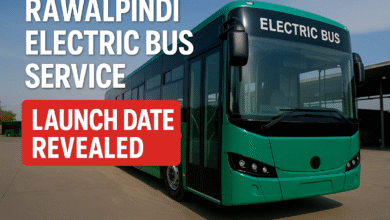
Faisalabad, Multan, Rawalpindi, and Gujranwala are likely next targets. Each city will receive vehicles proportional to its population and transport needs. The goal is reaching 10,000 electric taxis across Punjab within two to three years.
Technology Integration
Future phases may include more advanced vehicle models with longer ranges and faster charging capabilities. Autonomous driving features could eventually be incorporated as the technology matures.
Smart city integration will improve traffic management and reduce congestion. Real-time data from taxi GPS systems can inform infrastructure planning and optimize traffic light timing.
Policy Evolution
As the program matures, policies will adapt based on practical experience. Financing terms might become more flexible. The women’s quota could expand. Rural area provisions may develop differently than urban approaches.
Green credits, linking to the broader Green Punjab initiative, may reward drivers for their environmental contributions. This gamification of sustainability encourages continued participation and spreads environmental awareness.
Frequently Asked Questions
Who can apply for the Punjab E-Taxi Scheme? Any permanent Punjab resident between 21 and 45 years old with a valid driving license and no criminal record can apply. You must not own a vehicle and should be unemployed or earning less than PKR 30,000 monthly.
Is there an application fee? No, the application process is completely free. Be wary of anyone asking for money to process your application or guarantee selection.
How long does the approval process take? From application submission to vehicle delivery typically takes 3 to 4 months. Verification takes 2 to 4 weeks, followed by balloting and then final documentation and training.
Can I choose my preferred vehicle model? You can select from the government-approved list of electric vehicles. Specific models depend on what’s available when your application is approved.
What happens if I miss an installment payment? The Bank of Punjab will contact you to arrange payment. Consistent defaults may result in vehicle repossession. It’s crucial to maintain regular payments throughout the financing period.
Can I sell the vehicle before completing payments? No, ownership transfers to you only after full payment. The vehicle remains government property until all installments are completed.
Are there geographic restrictions on where I can operate? Initially, vehicles are meant for operation in designated cities. As charging infrastructure expands, operational areas will grow. Cross-province travel may have limitations depending on charging network availability.
What if the vehicle requires repairs? Warranty coverage handles most mechanical and electrical issues during the warranty period. Regular maintenance is your responsibility. The government’s support system includes guidance on finding qualified service centers.
Can couples apply jointly? Applications are individual. If both spouses meet eligibility criteria, each can apply separately, though both being selected is unlikely given the competitive nature of the program.
Will there be a second phase? Yes, the government has confirmed plans to expand the program based on the success of the initial phase. Keep monitoring official channels for announcements about future application windows.
Conclusion
The Punjab E-Taxi Scheme 2025 offers a genuine opportunity for unemployed youth and existing drivers to build sustainable livelihoods while contributing to environmental goals. With interest-free financing, government-covered registration costs, and comprehensive infrastructure support, the program removes many traditional barriers to vehicle ownership. The 1,100 electric taxis in the pilot phase represent just the beginning of Punjab’s transformation toward cleaner, more efficient public transportation. If you meet the eligibility criteria, preparing your documents now positions you well for current or upcoming application rounds. This initiative combines economic empowerment with environmental responsibility, creating benefits that extend beyond individual drivers to entire communities and future generations.