QR-Code Panic Buttons Installed in 82,000 Public Transport Vehicles: Benefits and How to Use Them
QR-code panic buttons now fitted in 82,000 Punjab transport vehicles let commuters alert Emergency 15 the moment harassment or robbery strikes.
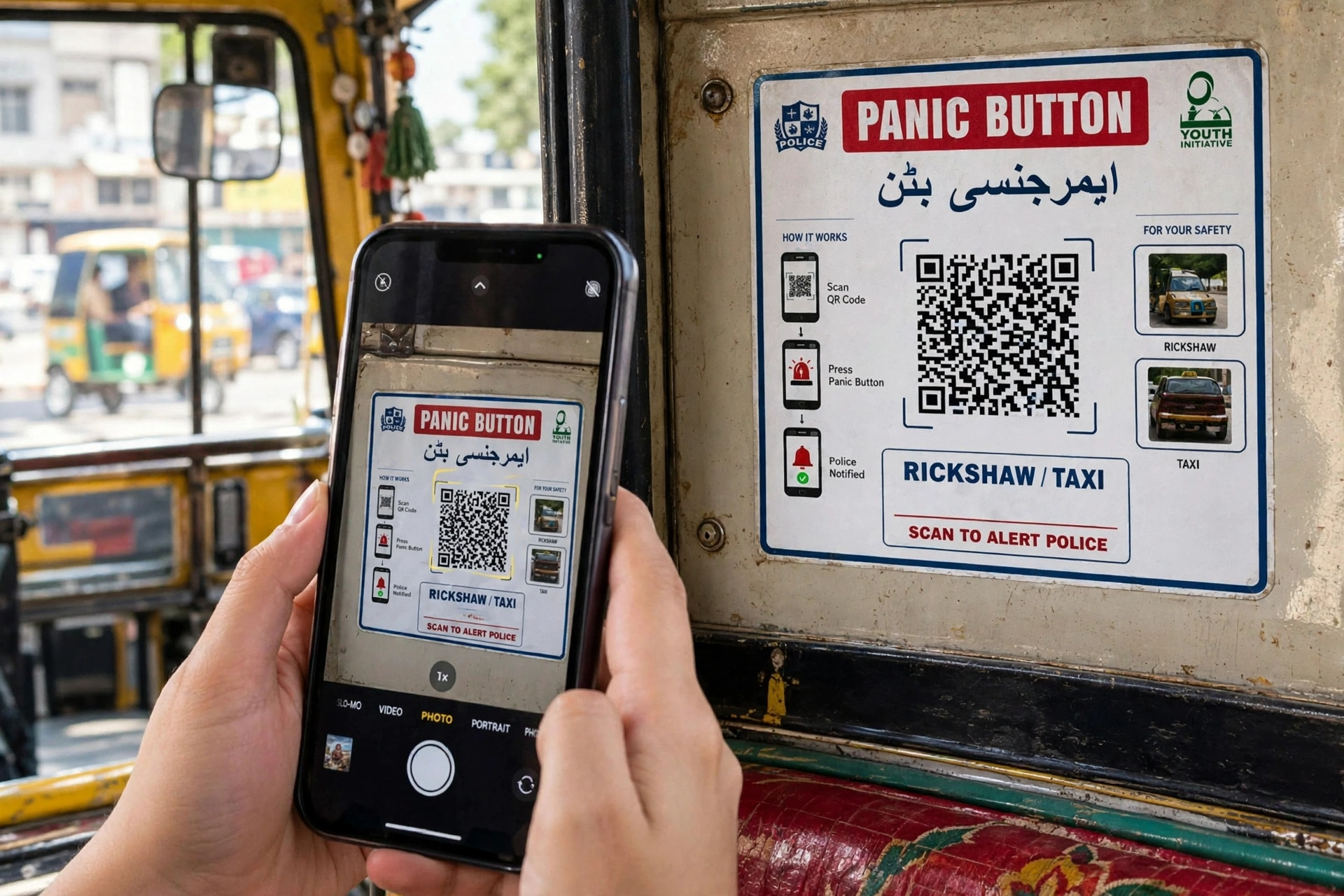
QR-code panic buttons have gone from pilot idea to province-wide reality. In a mandatory safety drive ordered by the Punjab government, more than 82,000 QR “pink buttons” have been pasted onto public transport vehicles, rickshaws and online cabs across the province, with traffic police installing them at street level. It is being treated as a legal requirement for every commercial vehicle, not an optional upgrade.
The reason is uncomfortable but real. Public transport in Pakistan has a long record of harassment, snatching and assault, and victims rarely had a fast way to call for help from inside a moving vehicle. The new QR panic button system closes that gap by turning a smartphone into a direct line to police. Scan the code, and a rider can verify the driver, share the trip with family, and trigger an emergency call if something goes wrong. This article explains what the system does, how to use it, where it helps, and where it could still fall short.
What Are QR-Code Panic Buttons?
QR-code panic buttons are scannable stickers that link a passenger straight to Punjab’s emergency network. Instead of wired hardware, the “button” lives in a web page or safety app that opens when you scan. The system was built in-house by the Punjab Safe Cities Authority for buses, wagons, rickshaws, taxis and other public transport, and operators download and print their unique QR codes free from the official PSCA website or Public Safety App. The sticker is cheap and replaceable; the real intelligence sits on government servers.
How the System Works
The platform bundles 12 features, including emergency calling, video calling, live chat, live location sharing, vehicle verification, driver information, family sharing and instant police response. The passenger flow is simple:
- Scan on boarding using your phone camera or app.
- Check the driver. The app shows verified government records for the vehicle, owner and driver.
- Share the trip. Send your live details and the verified vehicle card to family.
- Hit the panic button. A tap starts a voice or video call or live chat with responders.
- Let police find you. Your GPS location and vehicle data reach the Safe City Control Room, which routes the nearest unit.
One safeguard stands out: the code is tied to registration, so if ownership changes the old button goes inactive until new details are verified. Alerts route to the Virtual Women Police Station for a rapid response.
Benefits of QR-Code Panic Buttons
The benefits of QR panic buttons run across the whole trip:
- Faster help. One press removes the need to find a number, with help dispatched immediately.
- Verification before you sit down. Crime depends on anonymity; confirming the driver removes it.
- Protection for drivers too. Drivers can trigger it during robberies, disputes or accidents, making it a two-way tool.
- A legal trail. Officials call it mandatory to bring transport within the law.
- Deterrence. A traceable panic button linked to live cameras changes the calculation for any harasser.
The Realities: Why It Was Needed
These risks are not hypothetical:
- On Independence Day, a woman in a Qingqi rickshaw near Greater Iqbal Park was mobbed by motorcyclists, one of whom jumped on and tried to kiss her.
- A student who hired a rickshaw for her exam was instead driven to a deserted street before police caught the driver.
- An online cab driver took a woman onto the motorway without telling her and attempted harassment before she called for help.
- In Karachi, a “rickshaw gang” carried passengers and robbed them at gunpoint.
Each feature answers a documented crime: verification for fake drivers, live location for off-route diversions, the panic call for the moment of attack.
How to Use Them Correctly
Before the trip: scan first, confirm the driver, share your live location, and keep your phone charged.
During an emergency: tap the button early, use live text chat if you cannot speak, and stay on the line so your location keeps updating.
Responsibly: officials have cautioned users against misreporting and crank calls. Every false alarm steals a response someone else may need.


Limitations and Honest Concerns
The scheme only works if several things hold at once: codes stay visible and current, passengers know to scan, records stay updated, and police actually arrive fast. A faded sticker or a slow response breaks the promise. There is an access gap too, since riders without a smartphone or charge are left outside the net. And technology cannot fix everything, women have said that filing a complaint can still feel like facing a character assassination. A panic button is the first link in a chain that runs on through police stations and courts.
The Bigger Picture
The buttons fit a wider push, including Safe City cameras, Emergency 15, a women’s safety app and a Virtual Women Police Station. Fixed panic buttons have also appeared at markets, campuses and transport hubs wired to the PSCA control room. For official details, see the Punjab Safe Cities Authority portal, and for independent coverage of transport safety, TheNews.
The rollout of QR-code panic buttons across 82,000 Punjab vehicles puts verified emergency help within arm’s reach of every commuter, linking passenger, traceable vehicle and police control room through a single scan while protecting drivers too; the documented history of rickshaw and cab harassment, off-route diversions and gunpoint robberies shows exactly why it was needed, yet the honest takeaway is that the QR panic button will only deliver if stickers stay current, passengers learn to scan and share, false alarms are avoided, and police response proves genuinely fast, because this tool is ultimately the first link in a safety chain that still depends on human follow-through.