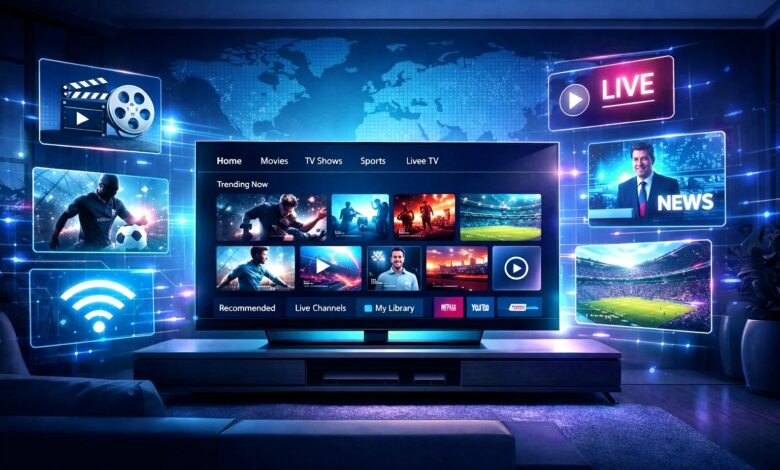
For decades, watching TV meant one thing: a cable box, a monthly bill, and a schedule you had no control over. You watched what was on, when it was on. That model worked for a long time, until the internet changed everything.
Today, millions of people are cutting the cord and switching to internet-based viewing. At the center of that shift is IPTV, a technology that delivers television content over your internet connection instead of through a satellite dish or cable wire. It sounds simple, and in a lot of ways it is. But the implications for how we consume entertainment are enormous.
IPTV is not just another streaming app. It is a complete reimagining of how television works, and it is growing faster than most people realize.
What Is IPTV and How Does It Work?
IPTV stands for Internet Protocol Television. Instead of receiving TV signals through a cable or antenna, content is delivered to your screen through your internet connection using the same technology that powers websites and video calls.
Here is the basic idea: a provider stores video content on servers. When you want to watch something, that content is sent to your device in real time, on demand, or as a live stream. No physical infrastructure is required beyond a decent internet connection and a compatible device.
This is fundamentally different from services like Netflix or Disney+. Those platforms are on-demand only. IPTV typically includes live TV channels, time-shifted content (so you can watch something that aired earlier), and video-on-demand, all in one place.
A standard IPTV subscription gives you access to a package of channels and content, similar to a cable package, but delivered entirely over the web.
Key Benefits of IPTV for Modern Viewers
The reason IPTV streaming is catching on so quickly comes down to a few core advantages that traditional TV simply cannot match.
On-Demand Content at Your Fingertips
With IPTV, you are not tied to a broadcast schedule. Most services include a library of on-demand content alongside live channels, so you can watch a show the moment it airs or catch up three days later. The choice is yours.
Access to Global Channels
One of the biggest draws of internet television is geographic freedom. Viewers can access channels from countries around the world, which is especially valuable for expats, language learners, and sports fans who follow leagues not covered by local broadcasters.
Multi-Device Compatibility
Whether you are on a smart TV, laptop, tablet, or smartphone, most IPTV services work across all of them. You can start watching on your living room TV and continue on your phone during your commute. That kind of flexibility is something cable TV was never built to offer.
Cost-Effective Entertainment
A standard cable package can cost $80 to $150 or more per month in the US. Many IPTV subscriptions offer comparable or wider content libraries for a fraction of that price. For budget-conscious households, the savings add up fast.
Also Read: How to Update YouTube TV App on Any Device: A Comprehensive Guide
IPTV vs Traditional Cable and Satellite TV
Putting both options side by side makes it clear why so many viewers are making the switch.
| Feature | IPTV | Cable / Satellite |
|---|---|---|
| Cost | Generally lower | Higher monthly fees |
| Flexibility | Watch anytime, anywhere | Fixed schedule, home-based |
| Channel Range | Global and local options | Mostly regional packages |
| Device Support | Works on most modern devices | Requires set-top box |
| Internet Required | Yes | No (but increasingly digital) |
| Contract Required | Often none | Usually 12 to 24 months |
The main advantage cable still holds is reliability in areas with poor internet. But as broadband coverage expands globally, that gap is closing fast.
Why IPTV Is Growing So Fast Worldwide
The rise of online TV services is not an accident. Several converging trends are driving adoption at a pace that is hard to ignore.
High-Speed Internet Is Now the Norm
Ten years ago, streaming HD content required a connection most households did not have. Today, fiber and 5G networks have made high-speed internet widely accessible across much of the world. The infrastructure that IPTV depends on has quietly become standard.
Smart TVs Have Changed the Living Room
Smart TVs are now the default in most new homes. They come pre-loaded with app stores, browser support, and the ability to install IPTV players directly. The barrier between a traditional TV and a streaming device has essentially disappeared.
Viewers Want More Control
Consumer behavior has shifted. People expect to watch what they want, when they want, without sitting through ads for products they do not care about. IPTV, combined with on-demand libraries, is built for exactly that expectation.
Content Is Going Global
Sports, drama, news, and reality TV are no longer confined to their country of origin. International content is in demand worldwide, and IPTV is one of the few delivery systems that can actually serve it at scale.
The Future of Television with IPTV
The trajectory here is pretty clear. Streaming technology is becoming the primary way people access video content, and IPTV sits at the intersection of live television and modern streaming in a way that no other format does.
In the coming years, we are likely to see a few major developments:
- Personalized channel bundles: Rather than paying for hundreds of channels you never watch, IPTV providers will increasingly offer flexible packages built around your actual viewing habits.
- AI-powered recommendations: Just like Netflix suggests your next show, IPTV platforms will get smarter about surfacing live content, sports events, and programs aligned with your interests.
- 4K and 8K streaming: As internet speeds increase, high-resolution live content will become standard rather than a premium add-on.
- Interactive features: IPTV opens the door for real-time polls, second-screen experiences, and viewer participation that cable television was never designed to support.
- Integration with smart home systems: Expect tighter connections between IPTV platforms and home automation, so your entertainment experience adapts to your routines automatically.
Digital entertainment is no longer a supplement to traditional TV. It is becoming the main event.
Challenges and Considerations
IPTV is impressive, but it is not without its limitations. If you are thinking about making the switch, here are a few things worth understanding first.
Internet Speed Requirements
IPTV relies entirely on your internet connection. For standard definition streaming, you can get by with around 10 Mbps. For HD content, 25 Mbps is more realistic. If multiple people in your household are streaming simultaneously, you need even more bandwidth. A slow or unstable connection leads to buffering, and buffering kills the experience.
Service Reliability
Not all IPTV providers are equal. Some services experience downtime during peak hours or major live events, like a big sports match, when thousands of users are streaming at once. Before committing to a subscription, it is worth researching the provider’s reputation for uptime and customer support.
Choosing the Right IPTV Provider
If you are not sure where to start, looking at an established service with a proven track record is a smart first move. For viewers in the UK, checking out the best IPTV subscription UK options is a good way to compare what is available before committing to anything. A reputable provider will typically offer a broad channel lineup, multi-device support, and consistent streaming quality that holds up during live events.
When evaluating a provider, look for:
- A clear content library with the channels or content you actually want
- Compatibility with your devices
- Responsive customer support
- Transparent pricing without hidden fees
- Positive reviews from real users
Avoiding the wrong provider saves you time and frustration down the road.
Legal Considerations
Not all IPTV services operate legally. Some offer pirated streams at suspiciously low prices. Beyond the obvious ethical issues, these services are unreliable, often taken down without notice, and can expose users to legal risk. Stick with licensed providers.
Frequently Asked Questions About IPTV
What is the difference between IPTV and regular streaming?
Regular streaming platforms like Netflix or Amazon Prime are on-demand only. IPTV combines live TV channels, catch-up content, and on-demand video in one service, making it much closer to a full cable replacement.
Do I need a smart TV to use IPTV?
No. While smart TVs make it easy, you can also use IPTV on laptops, smartphones, tablets, and streaming sticks like Amazon Fire TV or Roku. Most services are cross-platform compatible.
How much does an IPTV subscription cost?
Costs vary by provider and region, but most IPTV subscriptions range from $10 to $30 per month. That is significantly less than the average cable bill, which often exceeds $80 to $100 per month.
Is IPTV legal?
IPTV itself is a legitimate technology. Many licensed and legal providers operate IPTV services worldwide. The key is to choose a provider that holds proper licensing for the content it distributes.
What internet speed do I need for IPTV?
For standard definition, 10 Mbps is usually enough. For HD streaming, aim for at least 25 Mbps. If you are streaming on multiple devices at the same time, a faster connection will give you a better experience.
Conclusion
Television as we knew it is being rebuilt from the ground up. IPTV is not just a trend. It is the logical endpoint of a shift that has been building for over a decade. Faster internet, smarter devices, and a generation of viewers who grew up choosing what to watch on their own schedule have all made traditional cable feel increasingly outdated.
The benefits are real: more content, more flexibility, lower costs, and a viewing experience that fits around your life rather than the other way around. Yes, there are challenges to navigate, but they are getting smaller as technology improves.
If you are still paying for a cable package that serves you halfway, it might be time to take a closer look at what modern IPTV streaming has to offer. The options are better than they have ever been, and they are only getting better from here.