Digital Identity Verification: 7 Ways Banks Fight Fraud in Pakistan
Digital identity verification is helping Pakistani banks detect fake accounts, stop scams early, and meet strict SBP compliance rules.
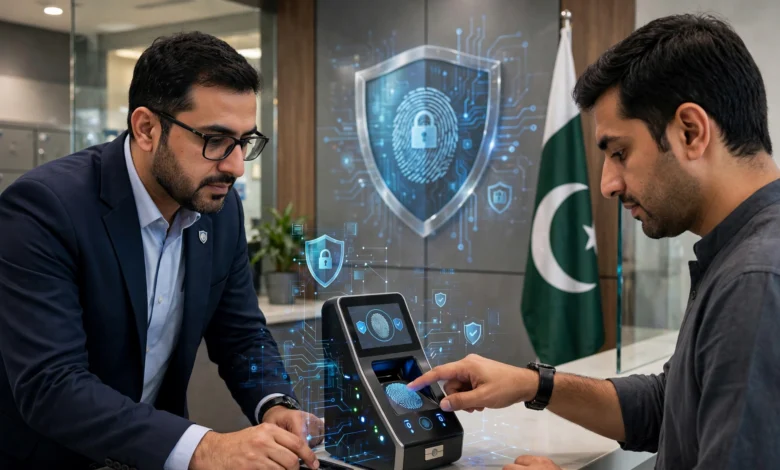
Digital identity verification has become one of the most important tools Pakistani banks rely on to catch fraud before it happens. As more people open accounts, apply for loans, and move money through mobile apps, banks can no longer depend on paper forms and manual checks to confirm who they’re really dealing with. Fraudsters have gotten smarter, and the old ways of verifying a customer just don’t hold up anymore.
Pakistan’s banking sector has seen a sharp rise in digital transactions over the past few years, driven by branchless banking, mobile wallets, and government pushes toward a cashless economy. That growth is good news for financial inclusion, but it also opens the door to identity theft, synthetic identities, and account takeover scams. A criminal doesn’t need to walk into a branch anymore. They can try to open an account, apply for a loan, or drain someone else’s savings entirely online.
This is where digital identity verification steps in. By using biometric checks, document scanning, and real-time database matching against records like NADRA’s national ID system, banks can confirm a customer’s identity in seconds instead of days. This article breaks down exactly how the technology works, why it matters for Pakistani banks specifically, and what the road ahead looks like as regulations tighten and fraud tactics evolve.
What Is Digital Identity Verification?
Digital identity verification is the process of confirming that a person is who they claim to be, using digital tools instead of manual paperwork. Instead of a bank employee eyeballing a photocopy of a CNIC, the system uses technology to check the authenticity of documents, match a live photo to an ID card, and cross-reference the information against trusted databases.
For Pakistani banks, this usually involves a few core steps:
- Scanning the customer’s CNIC or passport using optical character recognition (OCR)
- Capturing a live selfie or short video to confirm the person is physically present
- Running a liveness check to rule out photos, masks, or deepfakes
- Matching the ID data against NADRA’s Verisys system for instant confirmation
- Screening the customer against sanctions lists and politically exposed persons (PEP) databases
None of this requires the customer to visit a branch. A person can open a bank account from their phone in under ten minutes, and the bank still gets a verification process that’s arguably more thorough than the old manual one.
Why Fraud Is a Growing Problem for Pakistani Banks
Before getting into the solutions, it’s worth understanding why bank fraud in Pakistan has become such a pressing issue. A few trends have converged at once:
Rapid Growth in Digital Banking
Mobile banking users in Pakistan have grown massively over the past five years. The State Bank of Pakistan’s own data on branchless banking shows billions of rupees moving through mobile wallets every quarter. More transactions naturally mean more opportunities for fraud, especially when verification processes haven’t kept pace with transaction volume.
Rise of Synthetic and Stolen Identities
Fraudsters increasingly use a mix of real and fake information to create identities that don’t belong to any actual person, or they steal someone else’s CNIC details entirely. Without proper identity verification at onboarding, these accounts sail through undetected and often get used as mule accounts for laundering stolen money.


Social Engineering and Phishing Scams
A large share of fraud losses in Pakistan today doesn’t come from hacked systems. It comes from tricking people directly, through fake SMS messages, phone calls pretending to be from the bank, or phishing links that steal login credentials. Once a scammer has someone’s credentials, weak identity checks make it easy to take over the account.
Limited Manual Oversight
Bank staff simply can’t manually review every account opening or transaction with the same scrutiny at scale. As customer bases grow into the millions, relying on human judgment alone becomes both slow and inconsistent.
7 Ways Digital Identity Verification Helps Banks Fight Fraud in Pakistan
Here’s where the real value shows up. Digital identity verification tackles fraud at multiple points in the customer journey, not just at account opening.
1. Blocking Fake Accounts at Onboarding
The first and biggest win is stopping fraudulent accounts before they’re ever created. When a new customer applies to open an account, digital identity verification tools instantly check whether the submitted CNIC is genuine, whether it matches the person’s face, and whether that identity has already been flagged elsewhere. This alone prevents a huge share of fraud, since most large-scale scams start with a fake or stolen identity used to open an account in the first place.
2. Real-Time NADRA Verification
Pakistan has an advantage many countries don’t: a centralized national identity database through NADRA. Banks that integrate with NADRA’s Verisys or biometric verification services can confirm a CNIC’s authenticity and match a live fingerprint or facial scan against the government record in real time. This makes it far harder for someone to use a forged or altered ID document to pass through the system undetected.
3. Detecting Deepfakes and Spoofed Photos
As fraud tactics get more advanced, criminals have started using photo edits, printed masks, or even AI-generated deepfake videos to trick facial recognition systems. Modern identity verification platforms include liveness detection, which checks for natural movement, blinking, depth, and other signals that a static image or video can’t replicate. This closes a gap that basic photo matching alone would miss.
4. Reducing Account Takeover Fraud
Account takeover happens when a fraudster gains access to a legitimate customer’s login details and tries to drain their funds or change account information. By requiring a fresh identity check, such as a selfie match or one-time biometric confirmation, before high-risk actions like large transfers or password resets, banks add a layer of protection that stolen passwords alone can’t bypass.
5. Speeding Up Know Your Customer (KYC) Compliance
KYC compliance is mandatory for every regulated bank in Pakistan, but manual KYC checks are slow and prone to human error. Automated identity verification tools complete document checks, sanctions screening, and risk scoring in minutes rather than days. This doesn’t just reduce fraud risk, it also improves the customer experience, since people don’t have to wait around for approval.
6. Flagging Politically Exposed Persons and Sanctioned Individuals
Part of fighting fraud is also fighting money laundering, and the two are closely linked. Digital identity verification systems automatically screen new and existing customers against global sanctions lists, watchlists, and PEP databases. If a match comes up, the bank can flag the account for enhanced due diligence instead of letting it slip through standard processing.
7. Creating an Audit Trail for Regulators
Every verification check performed digitally leaves a timestamped, traceable record. This matters a lot when the State Bank of Pakistan or the Financial Monitoring Unit comes asking questions about a suspicious account. Instead of digging through paper files, banks can pull up a complete digital history of every check performed on a customer, which speeds up investigations and demonstrates regulatory compliance.
Regulatory Push: SBP and KYC/AML Requirements
The State Bank of Pakistan (SBP) has pushed hard for digital transformation across the banking sector, particularly through its guidelines on branchless banking and digital onboarding. Banks are required to follow strict Know Your Customer and Anti-Money Laundering (AML) rules, and digital identity verification is quickly becoming the standard way to meet those requirements without slowing down customer growth.
You can review SBP’s official regulatory framework on their site, which lays out the specific requirements banks must follow for digital account opening and customer due diligence: State Bank of Pakistan.
Globally, the push toward stronger identity checks is also shaped by international standards. The Financial Action Task Force (FATF), which sets global AML standards that Pakistan has worked to align with in recent years, has published detailed guidance on digital identity as a tool for financial crime prevention: FATF Guidance on Digital Identity.
Pakistani banks that fail to meet these standards risk not just fraud losses, but regulatory penalties, reputational damage, and restrictions on their ability to process certain types of transactions.
Challenges Banks Face in Adopting Digital Identity Verification
It’s not all smooth sailing. Pakistani banks face real obstacles in rolling out these systems at scale.
- Infrastructure gaps in rural areas — Reliable internet and smartphone access aren’t universal, which makes fully digital onboarding harder outside major cities.
- Cost of implementation — Smaller banks and microfinance institutions often struggle to afford advanced biometric and AI-based verification tools.
- Data privacy concerns — Customers are understandably cautious about sharing biometric data, and banks need to be transparent about how that information is stored and used.
- Integration with legacy systems — Many banks still run on older core banking software that wasn’t built to plug into modern verification APIs, requiring costly upgrades.
- Fraudster adaptation — As banks improve their defenses, fraud tactics evolve too, meaning verification systems need constant updates rather than a one-time setup.
None of these challenges are dealbreakers, but they explain why adoption across Pakistan’s banking sector has been uneven, with larger commercial banks moving faster than smaller regional players.
The Future of Digital Identity Verification in Pakistan
Looking ahead, a few trends are likely to shape how digital identity verification develops in Pakistan’s banking sector:
- Wider adoption of AI-driven risk scoring, where verification isn’t just a yes/no check but a continuous risk assessment based on behavior patterns.
- Deeper integration with NADRA’s digital services, potentially including real-time biometric verification tied directly to mobile banking apps.
- Shared fraud databases across banks, allowing institutions to flag known fraudulent identities across the entire sector rather than in isolated silos.
- Stronger regulatory mandates from the SBP requiring minimum verification standards for all digital financial products, not just traditional bank accounts.
- Growth of voice and behavioral biometrics, adding another layer of confirmation beyond just facial or fingerprint matching.
As digital banking continues to expand across Pakistan, identity verification will likely shift from being a compliance checkbox to a core part of how banks build trust with their customers.
Conclusion
Fraud in Pakistan’s banking sector isn’t going away, but digital identity verification gives banks a real fighting chance against it. From blocking fake accounts at the door to catching account takeovers before money moves, these tools address fraud at nearly every stage of the customer relationship. Combined with NADRA’s national database, SBP’s regulatory push, and growing awareness among customers, Pakistan’s banks are in a stronger position today than they were even a few years ago. The work isn’t finished, since fraudsters keep adapting and infrastructure gaps still hold some regions back, but the direction is clear: banks that invest in strong, real-time identity verification will be the ones that keep both their customers and their balance sheets safe.